
Running a small business means balancing customers, staff, stock and daily costs. Waste management can easily become something you deal with only when the bins are full.
However, a simple, organised system can make everyday operations easier. It helps you keep your premises tidy, understand collection costs and give your team clear instructions about what goes where.
Waste management for small businesses does not need to begin with a complicated plan. Start by understanding what you throw away, choosing suitable containers and arranging collections that match your needs.
This guide explains the basics for small businesses in England, including shops, offices, cafés and other commercial premises. Recycling requirements differ elsewhere in the UK.
What Counts as Small Business Waste?
Business waste is waste produced through commercial activity. It is not defined by how large your company is or how many bags you produce.
A small office, independent retailer or home-based business can all generate business waste. Materials may look similar to household rubbish, but their commercial origin matters when arranging disposal.
Examples include delivery packaging, unwanted paperwork, food preparation scraps, damaged stock and equipment that is no longer needed.
Waste from the part of a home used for business also counts as business waste. An ordinary household collection does not cover these materials, so you need a commercial arrangement.
Why Good Waste Management Matters
For a small business, overflowing bins and unclear collection arrangements create avoidable work. Staff spend time finding space for rubbish, cardboard builds up near deliveries and someone has to organise extra collections.
A planned system gives every waste stream a clear destination and makes it easier to identify problems before they disrupt your working day.
It can also help you understand where waste starts. Regularly throwing away damaged stock, unused ingredients or excessive packaging may reveal purchasing and storage issues.
Better waste management therefore involves both removing materials responsibly and reducing the amount your business needs to discard.
Step 1: Understand the Waste Your Business Produces
Before choosing bins or comparing quotes, look at what your business actually throws away.
Monitor a typical working week, including delivery days, then check again during a busy period. One week will not always show your peak volumes, so this gives you a more accurate picture.
Record the main materials, where they arise and approximately how much space they occupy. You do not need specialist equipment to start: counts of boxes, bags or container fill levels can provide a useful baseline.
For example, an independent shop may find that delivery cardboard takes up most of its waste storage area. An office may need relatively little general waste capacity but a clear system for paper and staff kitchen waste.
Look Beyond the Main Bin
Check stockrooms, staff rooms, desks and shared storage areas. Waste can accumulate in places that are not included in the usual cleaning routine.
Also record occasional items such as broken furniture, old electrical equipment and confidential paperwork awaiting destruction. Larger one-off jobs, such as clearing old desks and chairs, are usually better handled by an office clearance than squeezed into your regular bins.
Step 2: Separate Your Main Waste Streams
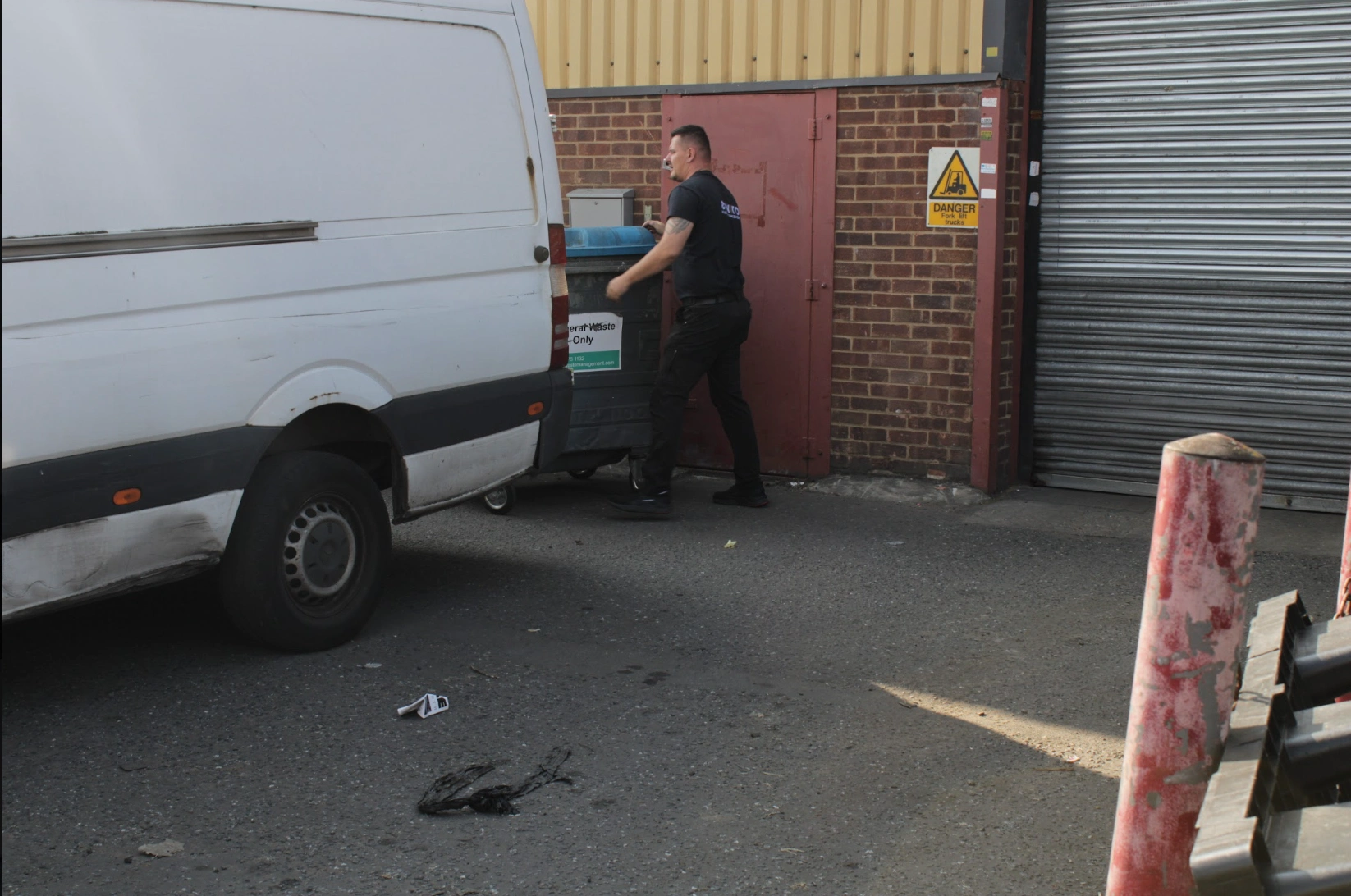
Grouping materials correctly, known as waste segregation, makes it easier to choose an appropriate collection service and explain the system to staff.
Common waste streams include:
| Waste stream | Typical examples |
|---|---|
| Paper and cardboard | Delivery boxes, office paper and packaging inserts |
| Other dry recyclables | Accepted bottles, cans, jars and rigid packaging |
| Food waste | Preparation scraps, leftovers and coffee grounds |
| General waste | Residual materials unsuitable for the available recycling services |
| Electrical waste | Unwanted computers, printers and appliances |
| Confidential waste | Sensitive documents approved for destruction |
The table is a starting point. If you are unsure where everyday items belong, our guides to what goes in a general waste bin and dry mixed recycling go into more detail. Ask your collector for a written accepted-materials list so your team knows how specific items should be presented.
A common mistake is putting packaging labelled “compostable” or “biodegradable” in food waste. It belongs in general waste or a dedicated collection, so check with your collector before buying it.
Not every plastic product belongs in a packaging recycling collection, so check which plastics can be recycled. Glass is often collected separately too, as our guide to how glass is recycled explains. Bulky products, mixed materials and specialist items may need a different route.
Cooking oil needs care too. Small amounts can go in food waste, while larger amounts need a used cooking oil collection. Cooking oil must never go down the drain.
Also, keep batteries and unwanted electrical equipment out of ordinary waste and recycling containers. Electrical items need a WEEE collection, and hazardous items such as lead-acid batteries and chemicals need a hazardous waste service. Not all batteries are hazardous: standard alkaline batteries usually are not, but they still need to be recycled separately. Sensitive paperwork should go to a confidential waste collection rather than the recycling.
Understand Simpler Recycling in England
England’s workplace recycling rules, known as Simpler Recycling, took effect on 31 March 2025. Businesses within scope must separate food waste, dry recyclables and residual waste before collection. This includes waste produced by customers and visitors, which matters for shops and cafés.
Micro-firms with fewer than 10 full-time equivalent employees have until 31 March 2027. The count covers the whole business, not each site, so a business with three sites and five staff at each is not a micro-firm. Volunteers, contractors and self-employed workers do not count, and there is no need to register for the exemption.
Plastic film, such as carrier bags and wrapping, must also be added to your plastic recycling by 31 March 2027.
Your collector is legally responsible for collecting paper and card separately from plastic, metal and glass, unless it has completed a written assessment allowing them to be collected together. Follow your collector’s instructions on how to separate them.
Food waste separation applies even where an in-scope workplace produces only small amounts or has no kitchen, and staff should not be asked to take food waste home. Ask your provider how the requirements apply to your collection setup, or read the government guidance on workplace recycling.
We collect general waste, dry mixed recycling, paper and cardboard, food waste and glass, so you can meet Simpler Recycling with one provider.
Step 3: Choose Containers That Fit Your Premises
The right container depends on your waste volumes, storage space and collection arrangements.
A wheeled bin may suit a business with a secure external storage area. Sacks can work better for small premises with limited space, depending on the waste type and local collection rules.
Some London boroughs only allow sacks to be put out during set time windows on certain streets. We schedule sack collections to fit these windows, so your waste goes out within the rules.
Do not choose based only on the largest container available. A bin that rarely fills can occupy valuable space, while insufficient capacity creates overflow and extra handling.
Discuss each waste stream separately with your provider. The capacity needed for cardboard may be very different from the capacity needed for food or residual waste.
For Central London premises, our commercial bin and sack collections offer 70L sacks and bins from 240L to 1100L, and a free on-site waste audit for bin and sack customers can help you pick the right sizes.
Think About Where Containers Will Go
Staff need convenient places to sort waste during the day, as well as somewhere suitable to store it before collection.
Consider whether containers will obstruct deliveries, reduce access to stock or make a shared yard difficult to use.
Check arrangements with your landlord if you occupy managed premises. Establish which containers belong to your business and whether any shared service already covers particular materials. Compliance notices can also be issued to landlords or facilities management companies that present waste on a business’s behalf, so everyone needs to know who is responsible.
Agree where sacks or bins should be presented and when. A service that fits your opening hours and premises is easier to maintain consistently.
Step 4: Arrange a Practical Collection Schedule
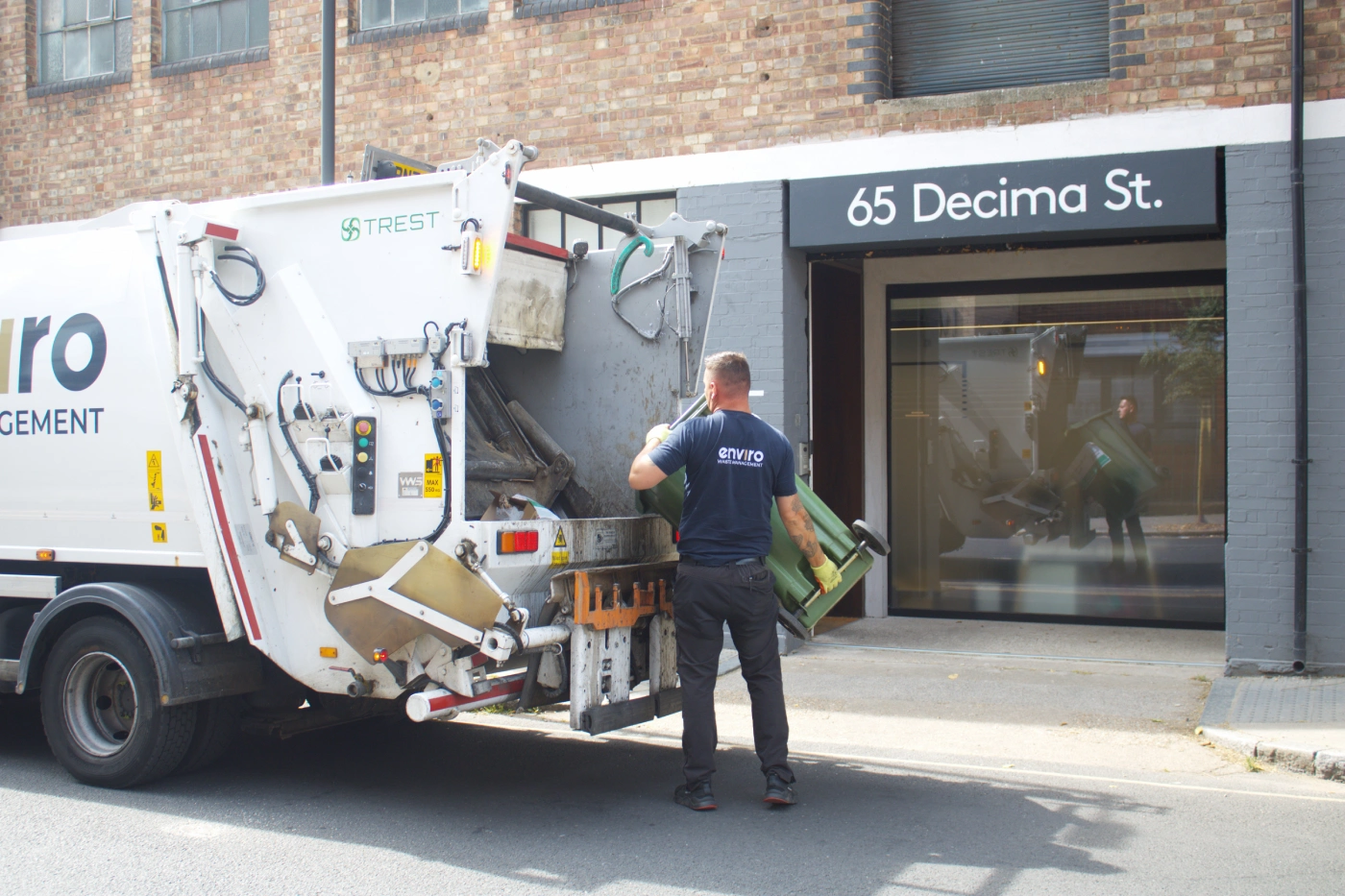
Your collection frequency should reflect how quickly each waste stream accumulates.
If you are starting a new service, plan ahead. New bins usually take seven to 14 working days to deliver, so allow for this if you are opening new premises or switching providers.
A shop receiving several deliveries a week may need regular cardboard collections. A business with changing seasonal demand may need additional capacity during peak periods.
Food waste requires particular attention to storage, odours and hygiene. Government guidance recommends weekly or fortnightly food waste collections, and food waste should not be stored for more than two weeks. Discuss suitable collection intervals with your provider rather than basing the schedule only on container size.
Watch for two common signs that the arrangement needs adjusting: waste regularly exceeds available capacity, or containers remain largely empty at collection time.
Confirm the Details Before Booking
Ask your provider to explain:
- Which materials the service accepts
- Container sizes and any weight limits
- Collection days and presentation times
- Access requirements and missed collection procedures
- Options for additional collections
- Holiday and seasonal arrangements
Give accurate information about your premises. Stairs, restricted loading, locked gates and shared entrances can all affect how a collection is organised.
Keep a clear contact process so staff know who to contact if a collection is missed or access changes. At Enviro Waste Management, if we miss a scheduled collection, that collection is free.
Step 5: Check Your Provider and Keep the Right Records
Small businesses have responsibilities for the waste they produce, even when another company collects it.
Check that your waste carrier is registered on the Environment Agency’s public register of waste carriers, brokers and dealers and that the proposed service is suitable for your materials. Store waste securely and provide an accurate description so it can be handled appropriately.
For non-hazardous waste transfers, you need a waste transfer note or an equivalent document containing the required information. Keep copies for at least two years.
Regular collections of the same waste can be covered by a single document, known as a season ticket, which lasts for up to a year. You also need a separate record of each collection, showing the date, time and amount collected. Keep both for two years after the last collection. Ask your provider how your documentation will be managed.
Hazardous waste involves additional requirements, covered in our guide on how to dispose of hazardous waste. Flag unusual chemicals, contaminated materials or unidentified substances before agreeing to a collection.
How Much Does Small Business Waste Collection Cost?
There is no single price that suits every small business. Costs depend on the materials, quantities, containers, collection frequency and access involved. Our page on small business waste collection explains how we build a quote.
If your premises are in our Central London coverage area, you can see bin and sack prices online at checkout through our Book Now page. Otherwise, contact us and we will send you a quote.
When comparing quotes, make sure each provider is pricing the same requirements. A weekly residual waste collection is not directly comparable with a package covering several separated streams.
Check whether the quoted amount includes:
- Container supply or hire
- Scheduled collections and treatment charges
- Weight allowances and excess charges, including for contaminated recycling (some collectors refuse or charge extra for heavily contaminated loads)
- Documentation or administration fees
- Additional collections
- VAT, where applicable
Also review the contract length, renewal terms, cancellation notice and any process for price changes.
A clear written breakdown helps you understand the ongoing commitment and budget for changes as your business grows.
Reduce Waste Before Paying to Remove It
The collection is only one part of the picture. Businesses have a legal duty to take all reasonable steps to keep waste to a minimum, so preventing waste comes before paying to remove it. It also reduces the amount of material your business needs to store and handle.
Start with recurring problems. If stock regularly expires, review order quantities and stock rotation. If products arrive damaged, check storage and handling before simply arranging more disposal capacity.
For packaging, ask suppliers whether reusable delivery containers or reduced packaging are practical. Keep clean packing materials for reuse where they remain suitable.
In an office, review unnecessary printing and avoid ordering supplies that are already sitting unused in cupboards.
Make Improvements Measurable
Choose one or two realistic targets, such as reducing discarded stock or cutting delivery packaging.
Compare progress against your initial waste review. A professional waste audit can give you a more accurate baseline. Record purchasing changes alongside collection figures so you can see whether reduced waste reflects a lasting improvement or simply a quieter month.
Don’t expect every change to save money straight away. Review actual invoices and operational results before deciding what works best.
Help Your Team Follow the System
Even suitable bins and a reliable collection service need clear everyday routines.
Use labels showing familiar items from your own business, and match bin colours to each waste stream. Staff are more likely to understand a picture of their usual drinks bottle or delivery box than a vague instruction to “recycle responsibly”.
Include waste sorting in new starter training and explain who checks storage areas before collection.
Ask cleaning staff to follow the same system. Separating materials at a workstation achieves little if the contents are later combined during cleaning.
If mistakes keep happening, review the layout and instructions. A poorly positioned bin or unclear label may be the problem.
Review Your Waste Plan as the Business Changes
A waste arrangement that suits a new business may become less practical as staff numbers, products or customer demand increase.
Review your setup after major changes and check it periodically during normal trading. Look at container fill levels, collection reliability, sorting problems and total costs.
For example, expanding online orders may increase packaging waste even if your shop floor remains unchanged. Introducing food service can create new storage and collection needs.
Keeping the plan current helps your collection service reflect what your business produces today.
Get Support With Your Business Waste
A useful waste plan starts with a few clear decisions: identify your materials, reduce what you can, provide suitable containers and arrange dependable collections.
At Enviro Waste Management, we set up waste collections for small businesses across Central London, with one point of contact and guaranteed collections.
Whether you are opening your first workspace or reviewing an existing arrangement, contact our team with your location, waste types and estimated volumes. We will recommend a practical setup and explain the quote.
Frequently Asked Questions
1. Do small businesses need commercial waste collections?
Small businesses need suitable arrangements for waste produced through commercial activity. This may involve a private collector, a council business service or a landlord’s managed arrangement. Household collections do not cover business waste, so confirm what your arrangement includes.
2. How can I work out which bins my business needs?
Review the materials and volumes your business produces during a typical week, then check again during a busy period. Consider storage space, delivery patterns and collection access. Ask your provider to recommend suitable containers for each stream and confirm which materials are accepted.
3. Does Simpler Recycling apply to businesses with fewer than 10 employees?
In England, micro-firms with fewer than 10 full-time equivalent employees have until 31 March 2027 to comply with Simpler Recycling. The count applies across the whole business. This temporary exemption does not remove existing responsibilities for managing waste safely and legally.
4. How often should a small business arrange waste collection?
Frequency depends on waste type, volume, available storage and trading patterns. For food waste, government guidance recommends weekly or fortnightly collections, and food waste should not be stored for more than two weeks. Monitor how quickly containers fill and review the schedule when demand changes or waste regularly exceeds the available capacity.
5. Can a small business use sacks instead of wheeled bins?
A sack collection may suit premises with limited storage space. Suitability depends on the waste stream, collector’s requirements and local presentation arrangements. Confirm approved sacks, collection times and secure storage before choosing this option.
6. How can a small business reduce waste management costs?
Review purchasing, prevent avoidable stock losses, reuse suitable materials and match collection capacity to actual volumes. Compare complete service costs, including allowances and additional charges. Monitor invoices and sorting issues to identify where changes could improve value.