
Office clearance day is often the final stage of a relocation, refurbishment or workplace closure. After weeks of organising furniture, reviewing equipment and planning your next steps, it is time to make sure everything marked for removal leaves the premises as agreed.
Knowing what to expect helps you prepare your team, coordinate building access and avoid last-minute confusion. It also makes it easier to understand your responsibilities before, during and after the collection, including the waste paperwork your business is legally required to sign and keep.
Although every office is different, a professional office clearance usually follows a planned sequence, from the initial walkthrough to loading and the final check. Here is how the day may typically unfold and what you can do to help it run smoothly.
Before the Clearance Team Arrives
Most of the work that makes clearance day run smoothly happens before the team arrives. The clearance team needs a clear understanding of what is being removed, how to access the building and who can answer questions on arrival.
Review your agreed inventory and quotation. Check that the list still reflects the contents of your office and tell the provider about any changes.
If you have added furniture, discovered another cupboard of paperwork or decided to retain certain equipment, explain this in advance. Changes can affect the time, vehicle space and services required.
Identify What Is Staying
Use clear labels or separate areas for items that must remain. For example, mark everything that is staying with a coloured sticker or a strip of coloured tape, and tell the clearance team which colour means “do not remove”. A simple, visible system like this is easy for everyone to follow and reduces the risk of the wrong item being taken.
Staff belongings, equipment moving to another office and furniture owned by your landlord should be easy to distinguish from clearance items.
Empty Desks, Cabinets and Storage Furniture
Ask employees to empty desks and remove personal possessions before the team arrives. Check drawers, lockers, filing cabinets, cupboards and desk pedestals, including spaces that have not been used recently.
Leaving paperwork or equipment inside furniture creates confusion about what is being collected. It also carries a real risk: confidential documents left in a filing cabinet could end up in general waste rather than secure shredding, and once the furniture has gone you have no control over where those papers end up.
Emptying furniture in advance also helps your team identify records that need to be retained and items that require separate handling. If you need assistance with packing or sorting, discuss this before booking. A removal team working to an agreed inventory may not have time allocated for reviewing the contents of every drawer.
Approve and Secure Confidential Documents
Confidential documents and data-bearing equipment that are being collected for destruction should be kept secure until the team takes them. For example, place papers in the secure, lockable bins or containers supplied by your provider, and keep them in a locked room or cupboard rather than in a corridor or shared area.
Decide which records have been approved for destruction before collection day, and make sure employees understand the decision. This matters because a destroyed record cannot be recovered. If your business later needs a contract, an employee file or financial records for an audit or legal claim, there will be no way to get them back. The clearance team should not have to decide whether a file is still needed by your business, so approvals must be completed before the collection.
Prepare IT Equipment
Before collection, your business should complete any necessary backups, approve equipment for disposal and confirm how stored information will be handled. Ask your IT contact to prepare equipment in advance, so laptops, desktops, servers and phones are clearly marked as approved for removal.
Agree Dismantling and Fixed Items at Booking
Desks, meeting tables and shelving do not always fit through an office entrance in their assembled form. Whether dismantling is needed is a decision made when booking, so tell your provider about large furniture in advance and make sure dismantling forms part of the agreed scope.
Fixed furniture, such as fitted cabinets and built-in units, often needs to be taken apart before it can be collected. Ask whether your provider’s crew can do this or whether you need to arrange it separately. At Enviro Waste Management, our own crew is experienced in dismantling fixed furniture for collection, so this can be included in the agreed scope. Check with your landlord too, as some fixtures may belong to the building.
Electrical appliances need to be isolated from the mains before collection. Switch off and unplug anything that plugs in, and arrange for a qualified electrician to safely disconnect any hardwired equipment in advance.
Agree What “Cleared” Means
Clarify what “cleared” means within your booking before the day. By the final walkthrough it is too late to change what was booked. Removing unwanted contents does not automatically include deep cleaning, repairs, decorating or reinstatement work required by a lease.
Check whether the service includes a basic sweep or any other tidying, and arrange additional work separately where needed.
Agree Timings and Any Handover Deadline
If you have a fixed handover deadline, discuss it with your provider when agreeing the scope, not on collection day. Being upfront about timelines gives the provider the chance to plan enough people and vehicles, prevents unexpected delays and protects both parties’ expectations on the day.
Confirm Access Arrangements
Make sure reception, security and building management know when the team is expected. Confirm any loading bay booking, goods lift reservation, parking arrangements and contractor sign-in requirements.
Confirm any specific protection requirements, such as floor or wall coverings, before collection day. If other businesses share the premises, tell building management which spaces will be affected and when.
Nominate a Site Contact
Nominate a contact who understands the agreed work and can be reached throughout the clearance. This person should have access to the relevant rooms and authority to resolve questions about the inventory.
Plan for Staff Who Stay in the Office
Some clearances can take place while parts of an office remain occupied. This depends on the layout, work involved and whether people can remain safely separated from removal activity, so it needs to be planned before the day.
If employees will be working during the clearance, agree with your provider which areas staff can use and which routes need to remain clear. The clearance team will identify the closest and safest access routes, including approved fire exits where building management permits it. They may also use protective floor coverings to prevent dust or damage, and secure delicate items first to avoid unnecessary noise, breakage or disruption. This helps employees continue working smoothly.
Staff should avoid leaving bags, deliveries or loose cables in the removal route. A full clearance may be easier to organise when the office is empty, particularly where furniture removal affects most workstations.
Arrival and the Initial Walkthrough
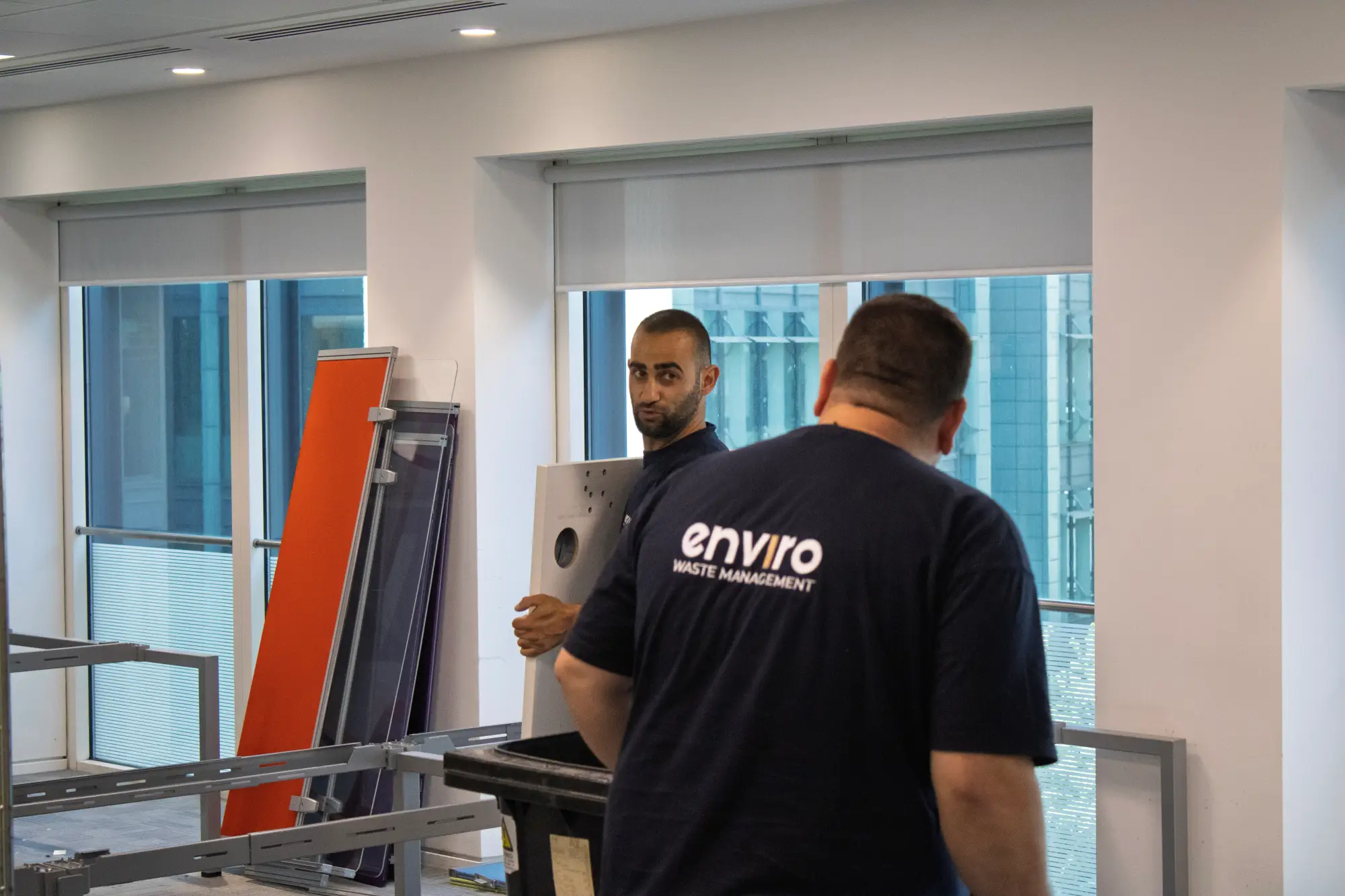
On arrival, the team will usually meet your nominated contact and review the clearance area before removal begins.
This walkthrough provides an opportunity to confirm which rooms are included, identify items that must stay and check the route to the collection vehicle.
Show the team any restrictions discussed during booking, such as narrow corridors, shared entrances or limited lift availability. Point out fragile surfaces and areas where employees or visitors will still be present.
The team may also check whether the items on site match the agreed inventory and photographs.
What Happens If the Scope Has Changed?
If there are additional items or unexpected access difficulties, the provider may need to review the plan before proceeding.
For example, an extra storage room or an unavailable goods lift can change the amount of work involved. Some items may also require a different collection or treatment arrangement, such as WEEE, confidential waste or hazardous waste that was not on the original inventory.
Ask the team to explain any proposed changes to the scope, timing or price. Have these confirmed before additional work begins so both parties understand what has been approved.
Agreeing the Removal Route and Working Areas
Before moving bulky items, the team will assess how to take them through the building and reach the loading point.
The route may involve corridors, staircases, lifts and shared reception areas. Keeping this route available helps avoid interruptions and reduces the need to move the same furniture more than once.
Depending on your building and the agreed service, the team will put in place the protection and access controls agreed beforehand, such as covering vulnerable surfaces or temporarily closing off a working area.
Sorting Items and Preparing Furniture for Removal
Once the scope and route are confirmed, the team can begin sorting and preparing the agreed items for collection.
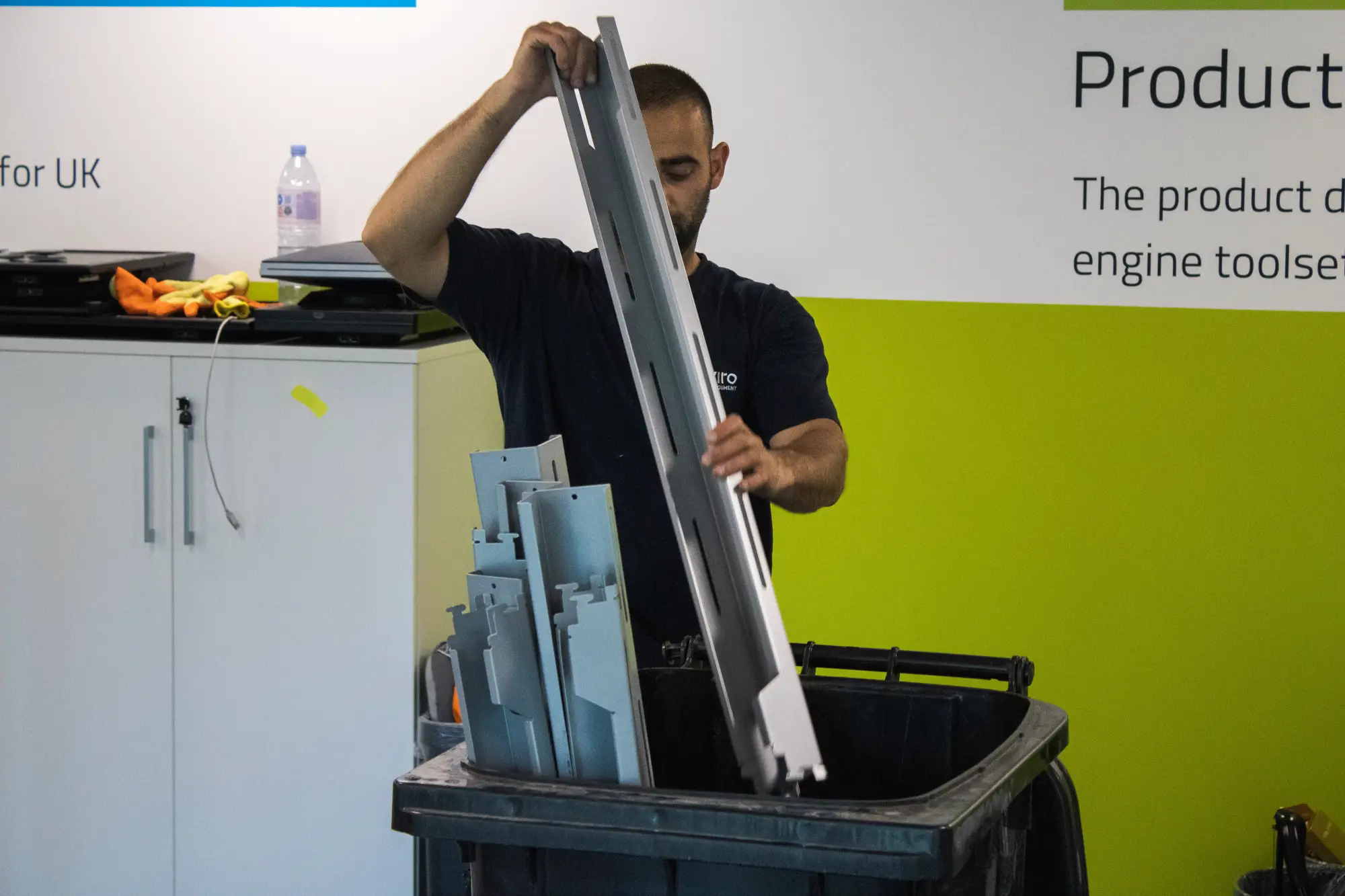
Where it is practical, items are sorted on site by type so each can go to the right collection or treatment route. For example, wooden furniture may be separated from WEEE such as monitors and printers, and metal shelving kept apart from general office waste.
Office clearances usually follow a systematic order. The team will start by clearing the main walkways and work areas, so there is a safe, obstacle-free route and space to dismantle larger items. Smaller, delicate or reusable items such as chairs are often taken out first. Monitors, screens and tables tend to follow, while large and fixed furniture usually goes last because it takes the most time and effort to dismantle and move.
Furniture may need to be moved away from walls, separated into manageable sections or dismantled to pass through doorways, in line with the dismantling agreed at booking.
Handling IT Equipment and Confidential Materials
Office clearance often includes more than furniture. Computers, printers, archive files and other sensitive materials need to follow the arrangements agreed with your provider, such as a WEEE collection for electrical equipment and secure shredding for confidential paperwork.
Keep these items identifiable and separate from general office waste so the team can check them against the collection brief.
Computers and Other Electrical Equipment
Monitors, laptops, desktop computers, printers and kitchen appliances may be included where an appropriate electrical waste collection has been arranged.
Recycling a computer and destroying its data are separate tasks. Recycling deals with the physical hardware: the equipment is broken down so materials such as gold, silver, copper and aluminium can be recovered. Data destruction deals with information security and privacy: sensitive files, passwords, financial records and business data are permanently wiped or the storage is physically destroyed so the information cannot be recovered. Do not assume that a recycling service also covers your data.
If data wiping or physical destruction is required, check that the agreed service covers it and confirm that you will receive a Data Destruction Certificate. This is the evidence your business needs to show that the data was destroyed.
Confidential Paperwork
Documents containing sensitive business or personal information should remain secure until they enter the agreed confidential waste collection process.
Confirm the quantity being collected and how the Data Destruction Certificate will be supplied. Avoid mixing sensitive files with general waste or leaving them unattended in shared areas.
Hazardous Items
Offices commonly hold hazardous waste, even if it is easy to overlook. Typical examples include fluorescent tubes, toner cartridges, cleaning chemicals and some batteries. Not all batteries are hazardous: lead acid, nickel-cadmium and mercury batteries are, while standard alkaline batteries usually are not.
Hazardous items must be kept separate from general clearance waste and declared to your provider in advance, as they need a specialist collection and their own documentation.
Loading the Collection Vehicle
The team will move prepared items to the vehicle using the agreed access route. The order of removal depends on the layout, item sizes and loading arrangements.
The team will plan the loading sequence around the conditions on site, grouping items by room or material where needed.
Clearance teams also check parking and loading restrictions beforehand. Keep the loading area available throughout the agreed collection window. Vehicles, deliveries or stored materials blocking this space can slow the process.
How Long Will Office Clearance Take?
There is no single timescale that applies to every office. Depending on the size of the office, a clearance can range from a few hours to several days. A small collection with easy access can be very different from clearing several floors containing heavy furniture and mixed materials.
The duration can depend on:
- The number and size of items
- Stair access and lift availability
- The distance to the collection vehicle
- Furniture dismantling requirements
- Separate handling for WEEE, confidential and hazardous waste
- Building rules and permitted working hours
Ask your provider for an estimated completion window based on the agreed scope.
The Final Walkthrough and Handover
Before the team leaves, walk through the agreed clearance areas with your nominated contact.
Check that the listed items have been removed and that anything marked to stay remains in place. Look in cupboards, meeting rooms and storage areas that formed part of the booking.
If an item has been left behind, ask why. It may have been outside the agreed scope or require a separate collection arrangement.
Raise questions while the team is still on site, when the details are easiest to review, and make sure the waste transfer note is signed before the team leaves.
Check Your Paperwork
Confirm which documents will be provided and when. Depending on what was collected, these may include:
- Waste transfer notes for general and non-hazardous waste
- Hazardous waste consignment notes for hazardous items
- WEEE certificates for electrical equipment
- A Data Destruction Certificate for confidential papers and data-bearing equipment
Some documents may follow after processing or destruction has taken place.
What Happens After the Collection?
After removal, materials follow the handling and treatment routes arranged for the service. Depending on their condition and suitability, items may be assessed for reuse, recycling or other appropriate treatment.
If your business needs reporting on particular materials or outcomes, request this before booking. Ask what can be documented rather than assuming that every clearance includes the same reporting package.
Keep the accepted quotation, final invoice and relevant service records together. These provide a useful reference if your facilities, finance or management teams need to review the work.
Your waste paperwork is also a legal requirement. Under your duty of care, waste transfer notes must be kept for at least two years and hazardous waste consignment notes for three years, and you must be able to produce them on request. Failing to do so can lead to a fixed penalty notice of up to £300.
For relocations and refurbishments, a completed clearance also gives you a clear point from which to schedule cleaning, contractor access and the next stage of the project.
Arrange Your Office Clearance With Confidence
A well-organised clearance day starts with a clear inventory, prepared premises and someone available to answer questions. Confirming the scope, access and specialist collection requirements in advance helps everyone work towards the same result.
At Enviro Waste Management, our office clearance in London covers unwanted office furniture, IT equipment and confidential waste services.
If you are preparing for a move, refurbishment or office closure, contact our team with your item list, access details and preferred collection date. We can discuss your requirements and help you plan the next steps.
Frequently Asked Questions
1. Do I need to be present on office clearance day?
A nominated contact should usually be available to provide access, confirm the items for removal and answer questions. Ask your provider whether they need to remain on site throughout or can be reachable after the initial walkthrough.
2. Should staff empty desks before an office clearance?
Yes, staff should remove personal belongings and check drawers, cupboards and lockers before collection. Separate anything being retained from clearance items. Keep confidential documents secure and prepare them according to the arrangements agreed with your provider.
3. Will the team dismantle office furniture?
Dismantling may be available if it is included in the agreed service. Tell your provider about large desks, meeting tables and shelving before booking. Fitted furniture and fixtures may require separate work beyond a standard office clearance.
4. Can an office clearance happen during working hours?
It may be possible where removal activity can be safely separated from employees and visitors. Discuss building access, noise, lift use and working areas beforehand. Larger clearances or restricted premises may be better suited to an alternative agreed collection time.
5. Will my office be cleaned after the clearance?
That depends on the booking. A clearance may include basic tidying, but deep cleaning, repairs and lease reinstatement are separate tasks unless expressly included. Confirm the expected condition of the premises before accepting the quote.
6. What documents will I receive after an office clearance?
Ask your provider which collection and waste records apply to your booking. If confidential destruction, data destruction or recycling reporting is included, confirm what evidence will be supplied and when. Some specialist documentation may follow after treatment is completed.