Replacing your seating is always an exciting upgrade. However, it creates an immediate practical problem: What exactly do you do with the old sofa?
An unwanted sofa is heavy, awkward to move, and takes up entirely too much valuable space. Whether you are clearing out an office breakout room or upgrading your living room, figuring out how to get rid of a sofa can feel like a logistical nightmare.
The short answer? You cannot simply leave a sofa by the bins.
Because of recent changes to UK environmental regulations regarding the materials used in upholstered furniture, sofa disposal requires a bit more planning than it used to. Fortunately, you have several reliable options, ranging from professional waste collections and charity donations to council services.
In this guide, we will walk you through the easiest and most compliant ways to get rid of an old sofa in the UK, explain the new environmental rules you need to know about, and help you choose the best disposal method for your situation.
Why Proper Sofa Disposal Matters in the UK?
If you are wondering why sofa disposal in the UK has suddenly become a more heavily discussed topic, the answer comes down to environmental compliance. Managing waste responsibly is no longer just about keeping streets clear; it is about handling complex materials safely.
The Introduction of POP Waste Regulations
In recent years, the Environment Agency issued new, strict guidance to waste carriers regarding upholstered furniture. Many older sofas, armchairs, sofa beds, and futons contain Persistent Organic Pollutants (POPs).
POPs were originally incorporated into furniture padding and upholstery as flame-retardant chemicals. Although they helped furniture comply with UK flammability standards, these chemicals can remain in the material for years and may harm the environment during disposal or breakdown. When released into the air, soil, or water, POPs can linger for long periods, accumulate in wildlife and ecosystems, and pose risks to human health through prolonged exposure or inhalation of contaminated dust.
Because of this, the way upholstered furniture is stored, treated, and disposed of has fundamentally changed. Sofas can no longer be sent to standard landfill sites. Instead, they must be segregated and sent for specialist thermal treatment (incineration) to safely destroy the pollutants.
So, what does that mean for your business? If you are having an old sofa collected, you may encounter additional processes or a small price increase across the waste industry. This reflects the additional handling and specialist treatment now required under UK environmental law.
There is no danger to you while the sofa is sitting in your home or office; the risk only applies during the commercial waste breakdown process.
Preventing Illegal Fly-Tipping
Fly-tipping is a common problem throughout the UK. Not only is it unsightly, but illegally dumping an old sofa can also lead to serious penalties.
Local councils in England can issue Fixed Penalty Notices (FPNs) of up to £1,000 for fly-tipping offences. More serious cases can be prosecuted in court, where offenders may face unlimited fines and other penalties under the Environmental Protection Act 1990.
Using an authorised and licensed waste management company helps ensure sofas are disposed of legally and responsibly.
How to Get Rid of a Sofa in the UK: 5 Easy Options
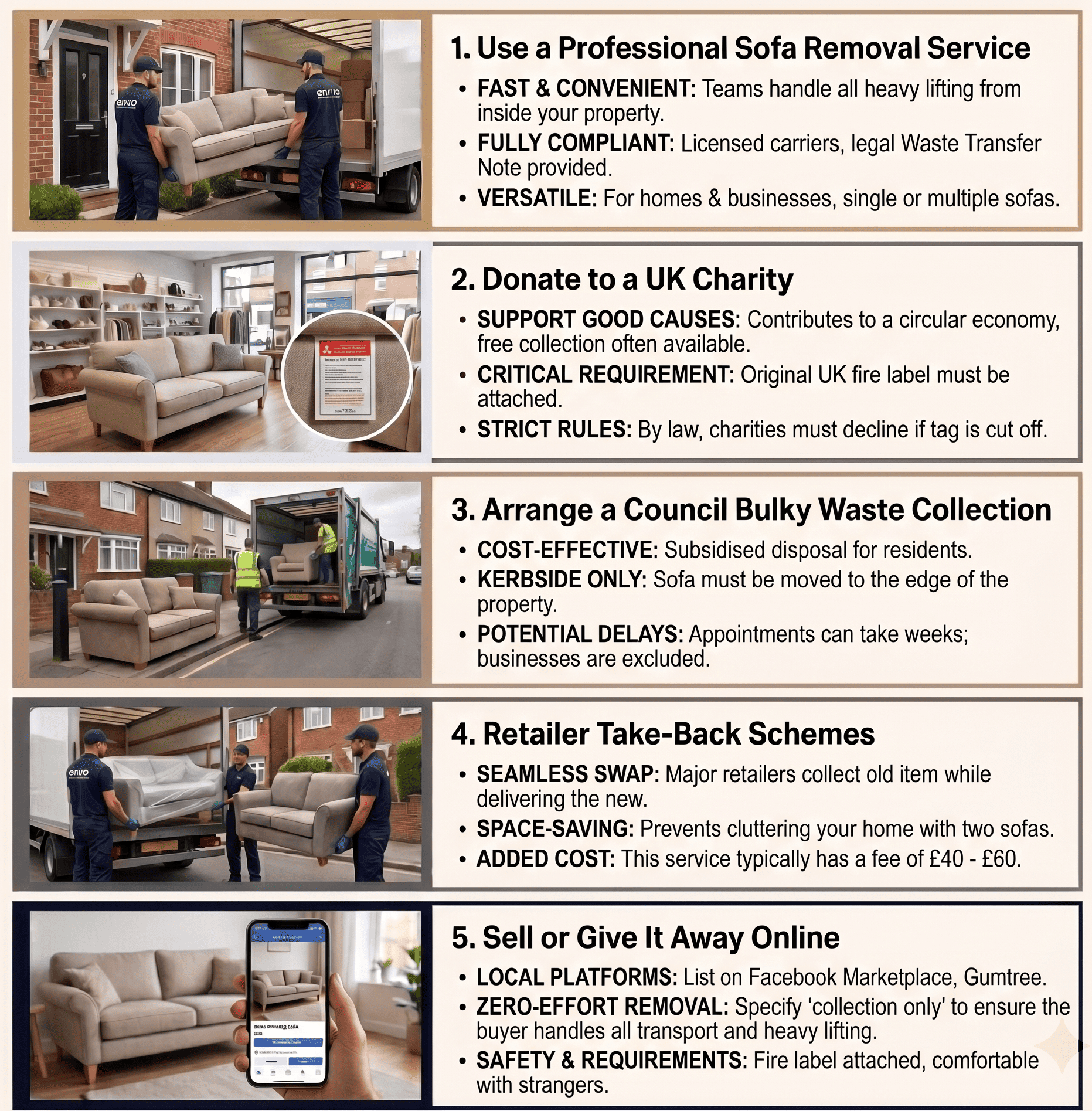
No single way to dispose of an unwanted sofa is the “best”. It depends on the condition of the furniture, your available resources, and the speed of the desired space clear-out.
Below are some of the most practical and commonly used sofa disposal options in the UK:
1. Use a Professional Sofa Removal Service
If you want the easiest, fastest, and most reliable solution, hiring an independent waste management company is the top choice. Sofa removal services are designed to take the heavy lifting completely out of your hands.
Professional collection teams will come directly to your premises – whether that is a residential property or an office building – and safely remove the furniture for you.
The Benefits:
- Speed: Many providers, including Enviro Waste Management, offer next-day services.
- Convenience: You do not need to drag the sofa out to the kerbside; the team handles the manual labour.
- Compliance: A reputable, licensed waste carrier will provide you with a Waste Transfer Note. This legal document proves that your furniture was disposed of in accordance with POP regulations and environmental laws.
- Versatility: Ideal for businesses managing an office clearance in London or beyond, as teams can remove multiple sofas, desks, and chairs in one go.
2. Donate to a UK Charity
If your sofa is still in great condition, donating it to charity is a brilliant way to support a good cause and keep furniture in the circular economy. Charities such as the British Heart Foundation, Sue Ryder, and local shelters often offer free collection services for large furniture items.
The Fire Safety Label Rule: There is a catch.
UK charities can only legally accept and resell upholstered furniture if it still has its original fire safety label firmly attached. This label proves the item meets UK fire flammability standards. If you have cut the tag off, the charity will unfortunately have to decline the donation, regardless of how pristine the sofa looks.
3. Arrange a Council Bulky Waste Collection
For domestic properties, your local council will offer a bulky waste collection service. You can book this via your local authority’s website.
The Benefits:
- Cost: Cheaper as it’s normally heavily subsidised.• Secure: The “proper” compliant way for householders.
- Secure: The “proper” compliant way for householders.
The Drawbacks:
- Wait times: Council collections can sometimes take several days or even a few weeks to arrange, depending on the local authority and appointment availability, which is not ideal if your new sofa arrives tomorrow.
- Kerbside rules: Most councils require you to move the sofa outside to the edge of your property yourself. If you live in an apartment block or cannot lift heavy items, this can be a major hurdle.
- Business restrictions: Councils generally do not offer this service for commercial properties or office buildings. Businesses must use private commercial waste solutions.
4. Retailer Take-Back Schemes
Are you buying a brand-new sofa? Ask the retailer if they offer a take-back scheme.
Many major UK furniture retailers now provide a service where they will collect your old sofa at the exact same time they deliver your new one.
While there is usually an additional fee for this service (typically between £40 and £60), it is very convenient because your new sofa arrives as the old one leaves.
5. Sell or Give It Away Online
If your sofa is in decent, usable condition (and still has its fire label), you might be able to find it a new home locally. Platforms like Facebook Marketplace, Gumtree, and Freecycle are excellent places to list unwanted furniture.
If you list the item for free and specify “collection only,” you can often find someone willing to come and remove the sofa from your property within a few days. Just ensure you are comfortable having strangers visit your home or workplace to collect the item.
Dos and Don’ts for Easy Sofa Disposal
DO:
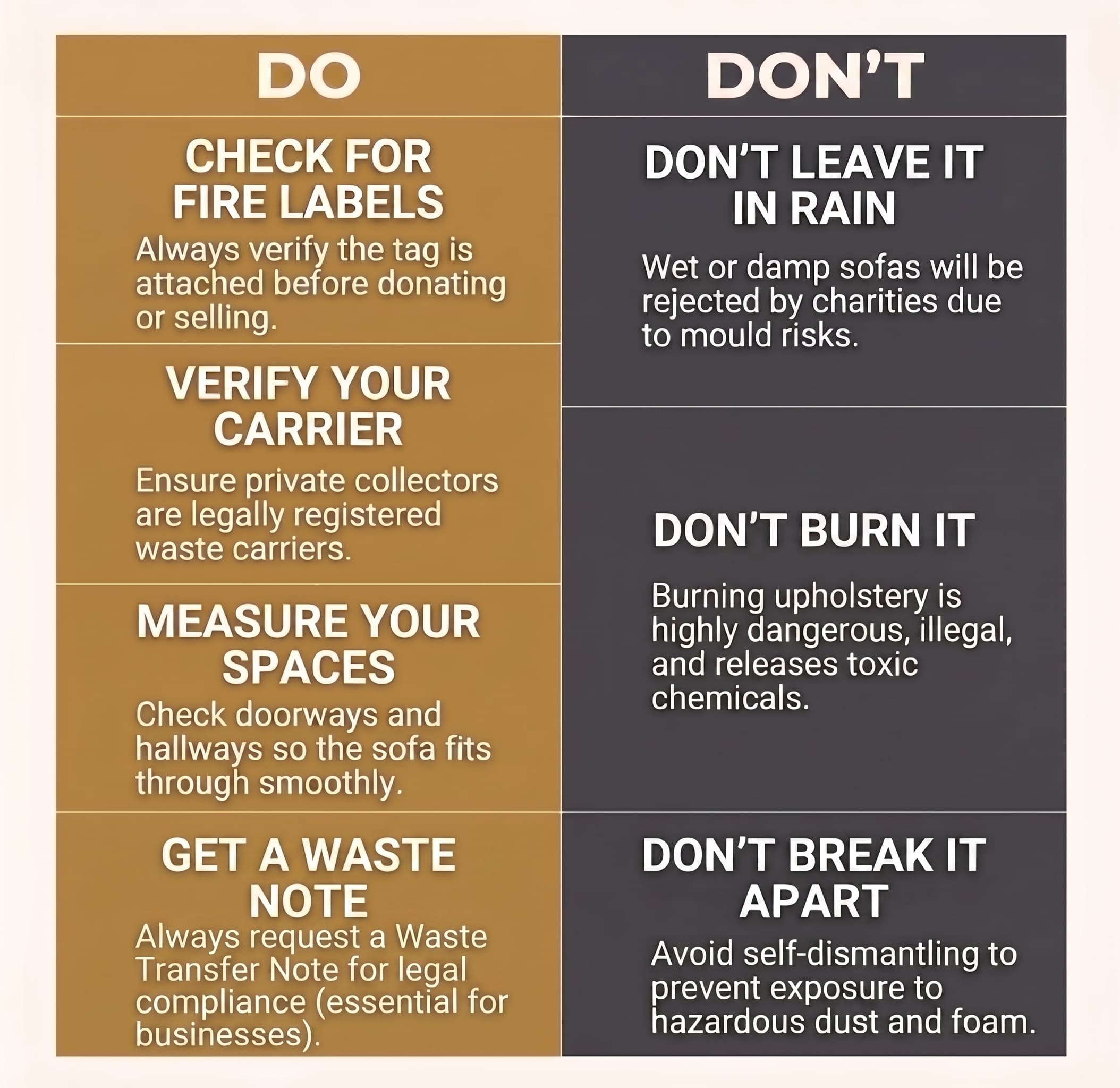
- Do check for the fire safety label. Always look for this before contacting a charity or attempting to sell the item online.
- Do verify your waste carrier. If you hire a private “man with a van,” ensure they are a legally registered Environment Agency Waste Carrier (Enviro Waste Management is a registered waste carrier in the UK).
- Do measure your doorways. Before the collection team arrives, make sure the sofa can easily fit through internal doors and hallways. You may need to unscrew the legs first.
- Do ask for a Waste Transfer Note. If you are a business disposing of office sofas, this paperwork is legally required to prove you met your Duty of Care.
DON’T:
- Don’t leave a sofa intended for donation outside in the rain. If a sofa gets wet or damp, charities will reject it due to mould and hygiene risks.
- Don’t attempt to burn it. Burning upholstered furniture is illegal, highly toxic due to POPs and incredibly dangerous.
- Don’t dismantle it yourself unless necessary. Breaking a sofa apart releases dust and foam that may contain restricted chemicals. Leave the processing to professional sorting facilities.
Commercial vs Domestic Sofa Disposal: What Businesses Need to Know
Although getting rid of a sofa from your living room is straightforward enough, it’s not quite as easy for businesses. Whether you’re changing the reception or the staff room, or carrying out a complete office clearance, there are rules regarding commercial waste.
Businesses cannot use domestic council tips or household bulky waste collections. Instead, you are legally obligated to use an authorised commercial waste management service.
When booking a collection for office furniture:
- Ensure minimal disruption: Select a service provider who offers an allocated window so the collection doesn’t interfere with your business day.
- Request a site visit: If you have a large volume of furniture to clear, professional waste experts can visit your premises to assess the logistics, check parking bay access, and ensure a safe, efficient collection.
- Maintain documentation: Your business must retain Waste Transfer Notes to demonstrate that the furniture was processed in alignment with the latest Environment Agency POP guidelines.
Sofa Recycling Options in the UK
A common question we hear from environmentally conscious businesses and homeowners is: “What actually happens to my sofa after it is collected?”
Sofa recycling options in the UK have evolved. Because of the POP regulations mentioned earlier, a sofa cannot simply be crushed and buried in a landfill. When you use a responsible waste management provider, the disposal process looks like this:
- Assessment and Segregation: Once collected, the furniture is taken to a specialist sorting facility.
- Material Recovery: Any safe, non-upholstered components (such as solid wooden frames or metal springs) can be carefully stripped, reclaimed, and recycled into new materials.
- Thermal Treatment: The foam, fabric, and cushions containing potential POPs are safely segregated. These materials are sent to specialist Energy from Waste (EfW) facilities, where they are incinerated at extremely high temperatures. This destroys the harmful chemicals and generates electricity for the national grid.
This process ensures compliance with environmental standards while supporting landfill diversion and the circular economy.
Sofa Recycling Made Easy in the UK
Figuring out how to get rid of a sofa doesn’t have to be a frustrating, time-consuming chore. Whether you choose to donate a well-kept settee to a local charity, arrange a council pick-up, or hire a private collection team, there are plenty of options available across the UK.
So, to sum it all up, the most important point is that disposal is safe. Now that the POP waste regulations have been enacted, it is more important than ever to ensure your furniture is sent to the correct treatment facility.
If you are a business looking to clear out office furniture, or if you simply want a fast, hands-off solution, working with licensed professionals is the easiest route.
Speak to our team about tailored waste solutions in the UK. At Enviro Waste Management, we provide reliable, compliant, and stress-free waste disposal services for businesses across London and the UK. Whether you need a single sofa removed or a complete office clearance, our in-house fleet is ready to help.
Get tailored support for your commercial waste requirements today.
Frequently Asked Questions
If your sofa is affected by fleas, bed bugs, mould, or any other infestation, it should not be donated, reused, or left outside for collection without first notifying the waste carrier. Infested furniture can spread pests to other items, vehicles, storage areas, or properties during transport.
Yes, most Household Waste Recycling Centres (tips) accept sofas from domestic residents. However, you must be able to safely transport it yourself in an appropriate vehicle. You will also notice that tips now have dedicated, separated containers specifically for upholstered seating due to new environmental rules.
Some local councils in the UK offer free bulky waste collections, but the majority now charge a flat administration fee per item. Check your local authority’s website for current pricing and wait times.
If a sofa is structurally broken, is torn, or missing its fire label, it cannot be donated or sold. Your best options are to book a professional waste clearance service, use your local council’s bulky waste collection, or arrange a retailer take-back when buying a replacement.
Costs vary depending on your method. Council collections generally cost between £20 and £50. Private professional waste collection services usually charge based on the size and weight of the item, factoring in the required POP treatment fees.
You can put a sofa in a skip, but you must inform the skip hire company beforehand. Because sofas are now classified as POP waste, they must be separated from general waste. Many skip companies will charge an additional fee for upholstered furniture to cover the cost of specialist disposal.
In most cases, the safest option is to arrange a professional bulky waste collection or specialist disposal service. Always inform the collection provider of the sofa’s condition in advance so it can be handled safely and in compliance.