
Planning an office move, refurbishment or closure involves more than deciding which desks to keep. Before booking a clearance, you need to understand what the work will involve and how much to budget.
An accurate office clearance quote starts with accurate information. The quantity of furniture, types of waste, building access and collection deadline all help determine the resources needed. Missing details can lead to a revised price, additional arrangements or delays on collection day.
Whether you are clearing a small workspace or several floors, a little preparation makes the quotation process easier. Follow these five steps to give your clearance provider a clear brief and compare proposals with confidence.
Why an Accurate Office Clearance Quote Matters
Two offices with the same carpet area can have very different clearance requirements. One might contain a few desks beside a ground-floor loading bay. Another might have heavy cabinets, archive boxes and old IT equipment spread across upper floors.
The second job may require more handling, different collection arrangements and additional time, even if both offices have the same carpet area. For example, a full four-drawer filing cabinet may need emptying and carrying down several flights of stairs by two people. Archive boxes of client files need secure collection and shredding rather than general disposal. Old computers and printers need data wiping or secure destruction, and careful handling so their components are not damaged, because they go to a licensed facility that can salvage parts for reuse rather than travelling in the same load as office chairs.
A useful quote should therefore reflect the actual contents and working conditions. It should also explain what is included, what is excluded and which assumptions could affect the final charge.
Preparing this information helps your business set a realistic budget, coordinate with building management and plan a smoother handover.
Step 1: Create a Detailed Inventory of Everything to Be Removed
Start by walking through every area included in the clearance. Check meeting rooms, cupboards, kitchens, storage areas and any basement space as well as the main office.
List items by type and quantity. “Office furniture” gives a contractor very little information, whereas “12 desks, 18 office chairs and four tall filing cabinets” provides a much clearer starting point.
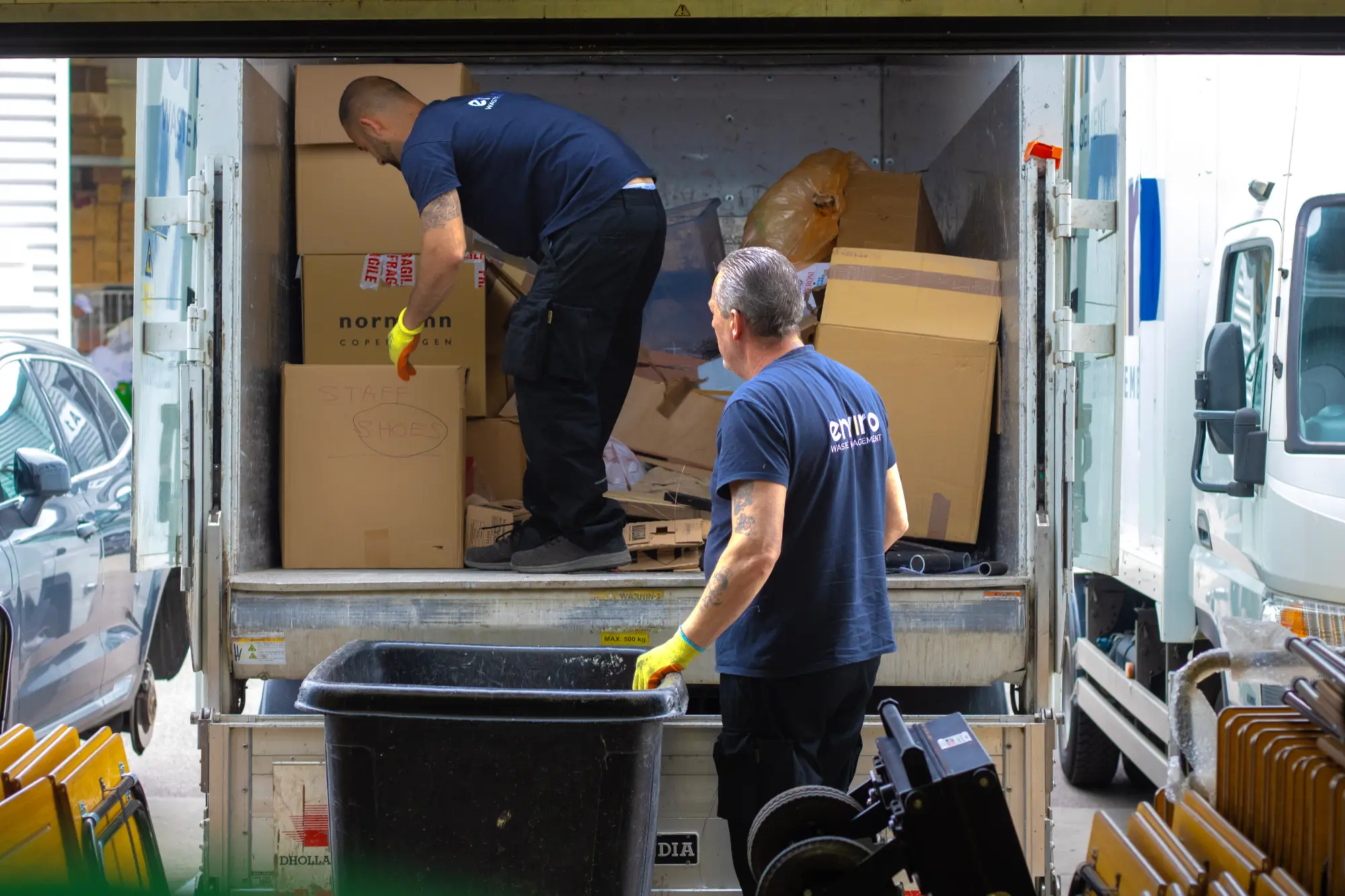
Your inventory might include:
- Desks, workstations and meeting tables
- Office chairs, sofas and reception furniture
- Filing cabinets, cupboards and shelving
- Computers, monitors, printers and cables
- Archive boxes and loose paperwork
- Kitchen appliances and other electrical equipment
- Packaging, redundant stock and general office waste
Include approximate dimensions for unusually large items, meaning anything that cannot fit through a standard doorway or lift, or that needs more than one person to carry it safely. Examples include boardroom tables, large reception desks, tall cupboards, heavy cabinets and safes. Mention any furniture that may need dismantling before it can pass through a doorway.
Keep electrical equipment and paperwork on the same inventory as your furniture, but give each its own heading rather than mixing them in with desks and chairs. As Step 4 explains, these items follow different collection and treatment routes, so grouping them now makes them easier to price separately.
Separate Items to Keep From Items to Clear
Make clear which items are staying, moving to other premises or awaiting a decision. Marking these categories on your inventory helps prevent confusion during the assessment and collection.
If your landlord owns particular furniture or equipment, confirm its status before including it in the removal list.
An inventory also provides a practical way to track changes. If more furniture becomes available for removal after the quote is issued, send an updated list and ask whether the price needs revising.
Step 2: Provide Clear Photos and Arrange a Site Visit Where Needed
Photographs help a clearance provider understand the size, condition and arrangement of the items on your list. They are especially useful when discussing the work remotely.
Take wide photographs of each room, followed by closer images of bulky or unusual items. Show furniture from the front and side to make its size and construction clear.
Avoid photographing only the most cluttered corner. The provider needs to understand the whole clearance area, including spaces where items are stored out of sight.
Useful images include:
- Each room included in the clearance
- Large furniture and electrical equipment
- Storage cupboards and archive areas
- Staircases, doorways and corridors
- Lifts and loading areas
Remove sensitive paperwork from view and avoid including readable personal information or confidential screen content in photographs.
Know When Photos Are Not Enough
A site visit can be helpful for larger or more complicated jobs. Multiple floors, restricted access, extensive dismantling or a high volume of mixed items can be difficult to assess from photographs alone.
Ask whether a site visit is recommended and whether there is a charge. A site visit gives the provider an opportunity to check removal routes and discuss the scope before confirming the quotation.
Even after a site visit, tell the provider if the contents or access arrangements change.
Step 3: Explain Building Access, Parking and Your Deadline
Access affects how quickly a team can move items from your office to the collection vehicle. A short route through a wide doorway is different from carrying furniture downstairs and along several corridors.
Provide the full collection address, postcode and floor level. Explain whether there is a goods lift and whether building management must reserve it in advance.
If lift dimensions or weight limits are available, share them. Large meeting tables or cabinets may need a different removal plan if they cannot fit.
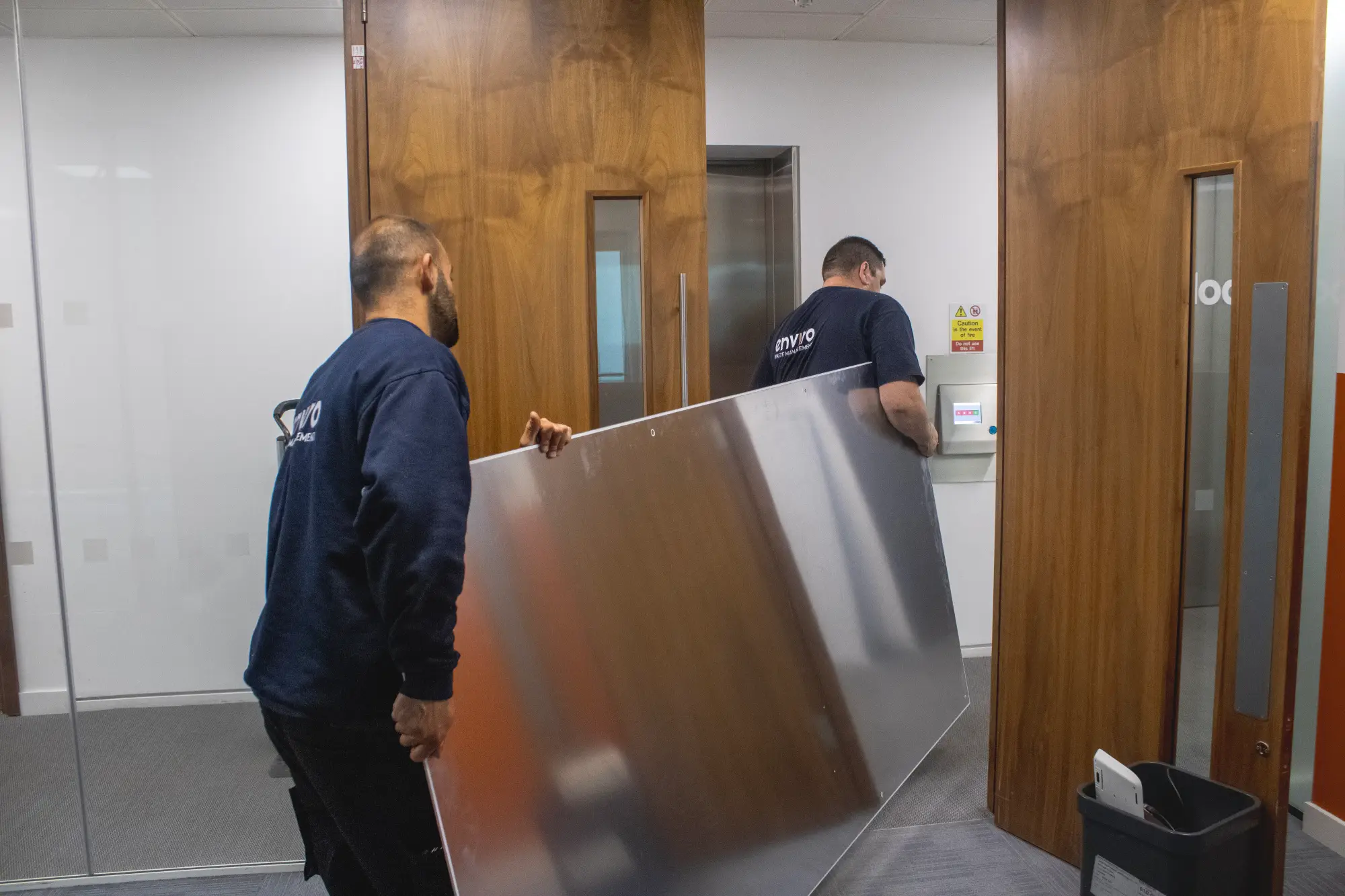
You should also explain:
- Whether stairs are involved
- The distance between the office and loading point
- Any narrow doors or restricted corridors
- Loading bay availability and booking requirements
- Parking restrictions and permitted loading times
- Security procedures and visitor sign-in requirements
For office clearance in London, parking and loading arrangements deserve early attention. Check with your building manager about suitable vehicle access and any permissions that need arranging.
Be Specific About Collection Times
Give your preferred clearance date and the latest completion deadline. Mention lease handovers, contractor visits or refurbishment work that depends on the space being empty.
If removal must take place outside normal working hours, include that requirement in the initial enquiry. Ask whether the proposed timing affects availability or price.
Where your office remains occupied, explain which areas will still be in use. This helps the provider assess whether a phased clearance is appropriate.
Step 4: Identify Electrical Equipment and Confidential Waste
Not everything in an office should be treated as the same waste stream. Different materials must follow different routes to stay compliant. Waste electrical and electronic equipment (WEEE) goes to licensed WEEE treatment facilities, confidential paperwork goes for secure shredding, and hazardous items such as batteries and fluorescent tubes must be moved with a hazardous waste consignment note. Furniture and general office waste can then be collected for reuse, recycling or disposal.
Identifying these items early helps the provider include the right services in your office clearance quote.
Give Electrical and Electronic Equipment Its Own Category
Using the inventory from Step 1, group computers, monitors, printers, servers and kitchen appliances together under their own heading. Include quantities and flag any equipment that stores business information, such as laptops, desktop computers, servers, external hard drives and multifunction printers with internal memory.
Discuss suitable collection through a dedicated WEEE waste service. Ask how any required data wiping or physical destruction will be handled and whether it is included in the quoted price.
WEEE recycling and secure data destruction address different needs, so one does not replace the other. WEEE recycling deals with the physical equipment: devices are handled carefully so working parts can be salvaged for reuse, the remaining materials such as metals and plastics are recovered at a licensed facility, and hazardous components are dealt with safely. Data destruction deals with the information stored on those devices: hard drives and other storage media are wiped to a recognised standard or physically destroyed so that business and personal data cannot be recovered. A computer can be recycled correctly and still leave readable data behind, so confirm both services where your business requires them.
Explain Your Confidential Document Requirements
Payroll records, customer files and other sensitive documents need a planned collection and destruction process. Under UK GDPR and the Data Protection Act 2018, your business remains responsible for the personal data in these files until it is destroyed. Documents left in open sacks or mixed with general waste during a clearance could be lost, read or taken, which may lead to a data breach, regulatory action and damage to your reputation.
Estimate the quantity by archive box, bag or container, and explain your security requirements. For example, you may need lockable bins or cabinets to hold documents securely before collection, sealed transport, and shredding to BS EN 15713, the recognised standard for the secure destruction of confidential material. Ask about confidential waste disposal and the Data Destruction Certificate available for the agreed service.
Keep these materials separate from ordinary clutter while awaiting collection.
Flag Hazardous and Unusual Materials
Also flag batteries, fluorescent lamps, printer toner, leftover chemicals and any unidentified materials. Items like these may be classed as hazardous waste, which cannot be mixed with general waste and must be moved with a consignment note. Give the provider the available product details, such as labels or safety data sheets, rather than assuming they can be included with furniture.
Ask which items are accepted and whether any require a separate assessment or collection.
Step 5: Request an Itemised Written Quote
Once the provider has your inventory, photographs and access information, and has completed a site visit where needed, request a written quotation that breaks the price down item by item and service by service.
A single total price is useful, but it does not show what you are paying for. An itemised quote lets you see how much each part of the work costs, check that nothing has been left out and compare providers line by line.
Ask the provider to show a separate price for each of the following, or to state clearly that it is included at no extra cost:
- Labour, loading and transport
- Any agreed furniture dismantling
- Recycling, treatment and disposal charges
- WEEE collection, data destruction and confidential waste services
- Parking arrangements and associated charges
- Any agreed out-of-hours work
- VAT, either shown separately or confirmed as included
- Documentation, such as Waste Transfer Notes (WTNs), Hazardous Waste Consignment Notes (HWCNs), WEEE certificates and Data Destruction Certificates
The quote should also list any exclusions and the circumstances that could change the price. Clarify whether the figure is a fixed quote for an agreed scope or an estimate subject to further assessment, and ask how additions or access problems would be priced and approved.
Check the Waste Carrier Licence First
Before comparing prices, check that every provider is registered with the Environment Agency as a waste carrier. This is the most important check of all. Under the waste duty of care, your business remains responsible for its waste even after it leaves your premises. If an unregistered carrier fly-tips your furniture or files, your business could face investigation and fines, as well as the risk of confidential information being exposed.
Ask each provider for their waste carrier registration number and check it on the Environment Agency’s public register of waste carriers, brokers and dealers. A noticeably cheaper quote from a carrier who cannot provide this information is a warning sign, not a saving.
Compare Quotes Against the Same Brief
Send the same inventory and requirements to each provider. Otherwise, a lower figure may simply reflect fewer included services.
For example, one proposal may include dismantling and confidential document destruction, while another covers only furniture already prepared for loading.
Check payment terms, cancellation conditions and how long the quotation remains valid. Resolve any unclear wording before accepting the booking.
Common Mistakes That Can Affect Your Quote
Underestimating the contents is a frequent problem. Cupboards, kitchens and storage rooms can contain a substantial amount of material that does not appear in photographs of the main office.
Another mistake is assuming the collection team will dismantle furniture, disconnect equipment or remove fitted fixtures automatically. Describe these tasks and obtain confirmation of what the service covers.
Avoid booking before checking building access. An unavailable goods lift or an unreserved loading bay can disrupt an otherwise straightforward clearance.
Finally, keep the provider informed. If the volume changes, the lift becomes unavailable or the deadline moves, updating the brief early gives everyone time to adjust.
Request Your Office Clearance Quote
A detailed inventory, clear photographs and confirmed access arrangements give your clearance provider the information needed to assess the job properly. Identifying specialist materials and checking the written scope then helps you understand exactly what you are booking.
At Enviro Waste Management, we provide office clearance in London as part of a full range of commercial waste services. Alongside furniture removal, our team handles WEEE waste removal, confidential waste disposal and hazardous waste disposal, so every waste stream from your clearance can be collected by one registered waste carrier. We also offer commercial bin and sack collections for day-to-day waste and waste audits to help you plan recycling in your new workspace.
Planning a move, refurbishment or workspace clear-out? Contact our team with your inventory, photographs and preferred date to discuss your requirements and request an office clearance quote.
Frequently Asked Questions
1. What information do I need for an office clearance quote?
Provide your address, item quantities, photographs, floor level, lift access, parking details and preferred date. Identify electrical equipment, confidential documents and unusual materials separately. Explain any dismantling requirements and confirm which items should remain in the office.
2. Can I get an office clearance quote from photographs?
Photographs can help a provider assess straightforward clearances, particularly when supported by an inventory and access details. Larger or more complex jobs may need a site visit before the provider can confirm the scope and price.
3. What affects office clearance costs?
Costs can vary with the quantity and type of items, labour time, access, dismantling, transport and treatment requirements. Restricted loading arrangements or specific collection times may also affect the quote. Ask for a breakdown based on your particular premises.
4. Is confidential waste disposal included in an office clearance?
It depends on the provider and the agreed service. At Enviro Waste Management, confidential waste disposal can be included in your office clearance. Documents are collected in lockable bins, shredded off-site and confirmed with a Data Destruction Certificate. Computers and storage devices are wiped to meet data sanitisation standards or are physically destroyed. Identify sensitive documents and devices when requesting your quote so these services are included in the price.
5. Can my office clearance quote change after booking?
A quote may need revising if the agreed scope changes, additional items appear or access differs from the original brief. Ask what could affect the price and request written approval of any changes before additional work proceeds.
6. Do I need to dismantle office furniture before collection?
Ask your provider before dismantling anything. Some clearance services can include dismantling, while others expect furniture to be ready for removal. Share photographs and dimensions of large items so the quote accounts for any agreed preparation work.