Whether you operate a busy office, restaurant, retail store, warehouse, or healthcare facility, we help you manage general mixed waste efficiently, compliantly, and with minimal disruption to your day-to-day operations.
A general mixed waste bin is designed for waste that cannot be reused, recycled, or separated into another dedicated waste stream.
At Enviro Waste Management, we help businesses identify which materials genuinely belong in general waste and which should be separated into other streams to improve recycling performance and reduce unnecessary costs.
Not everything can be placed in a general waste bin. Some waste types require specialist handling because they present environmental, legal, or safety risks.
Improper disposal of these materials can create serious problems. Companies are legally responsible for the proper storage, transport, and disposal of waste under the UK’s Duty of Care legislation. Depending on the severity of the breach, non-compliance may result in enforcement action, fines, reputational damage, or legal liability.
Different industries produce different waste.
A restaurant’s waste profile looks very different from a warehouse or healthcare facility. That is why waste collection should be tailored to how each business actually operates.
Different industries produce different waste.
A restaurant’s waste profile looks very different from a warehouse or healthcare facility. That is why waste collection should be tailored to how each business actually operates.
01/05
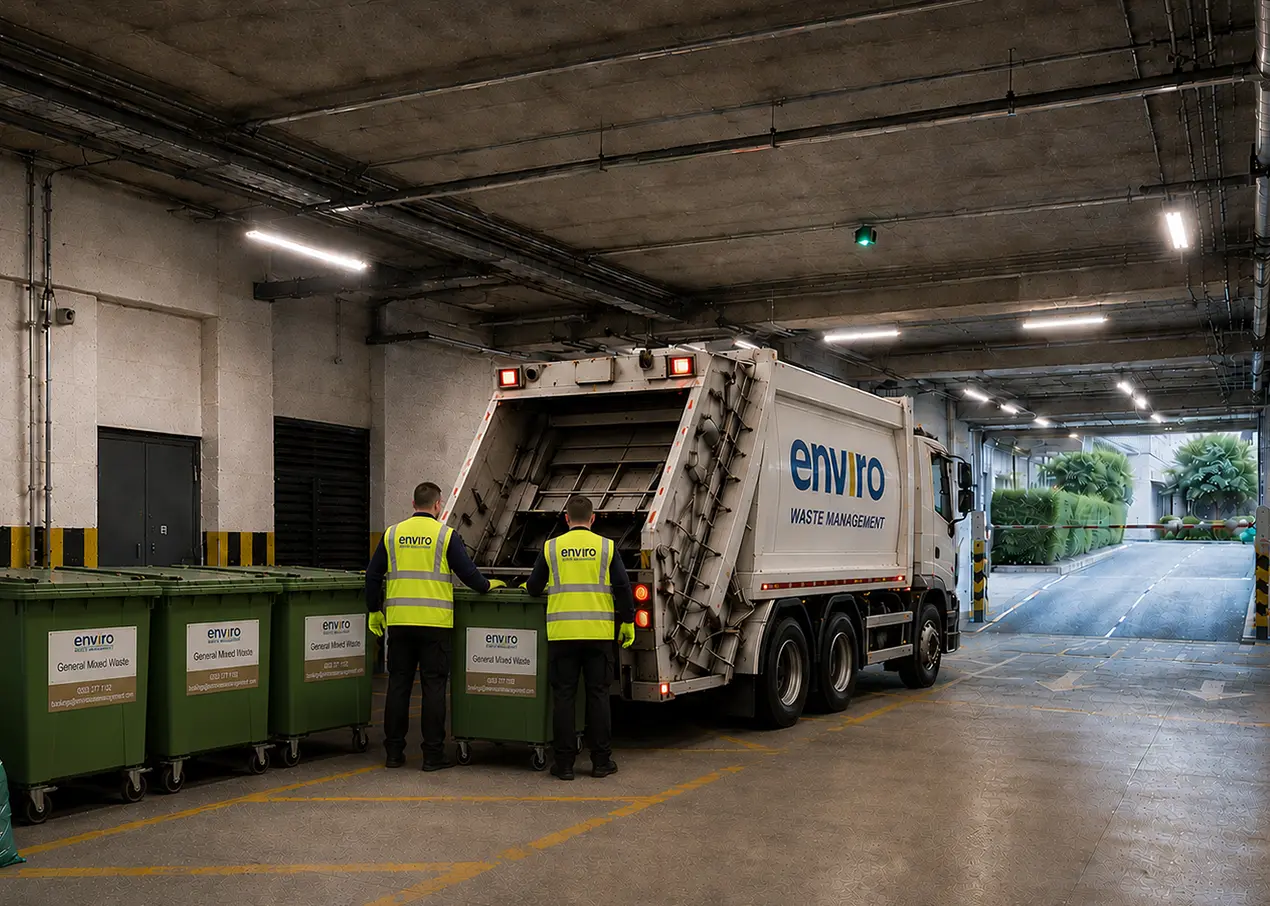
Offices generate a mix of paper waste, food packaging, disposable cups, stationery waste, and general kitchen waste.
General waste collections in office environments are usually carried out from designated bin stores, service yards, or concealed waste areas within the building.
For sack collections, waste is typically placed at an agreed kerbside or pickup point using Enviro-branded sacks, allowing for quick and efficient collection with minimal site involvement.
02/05
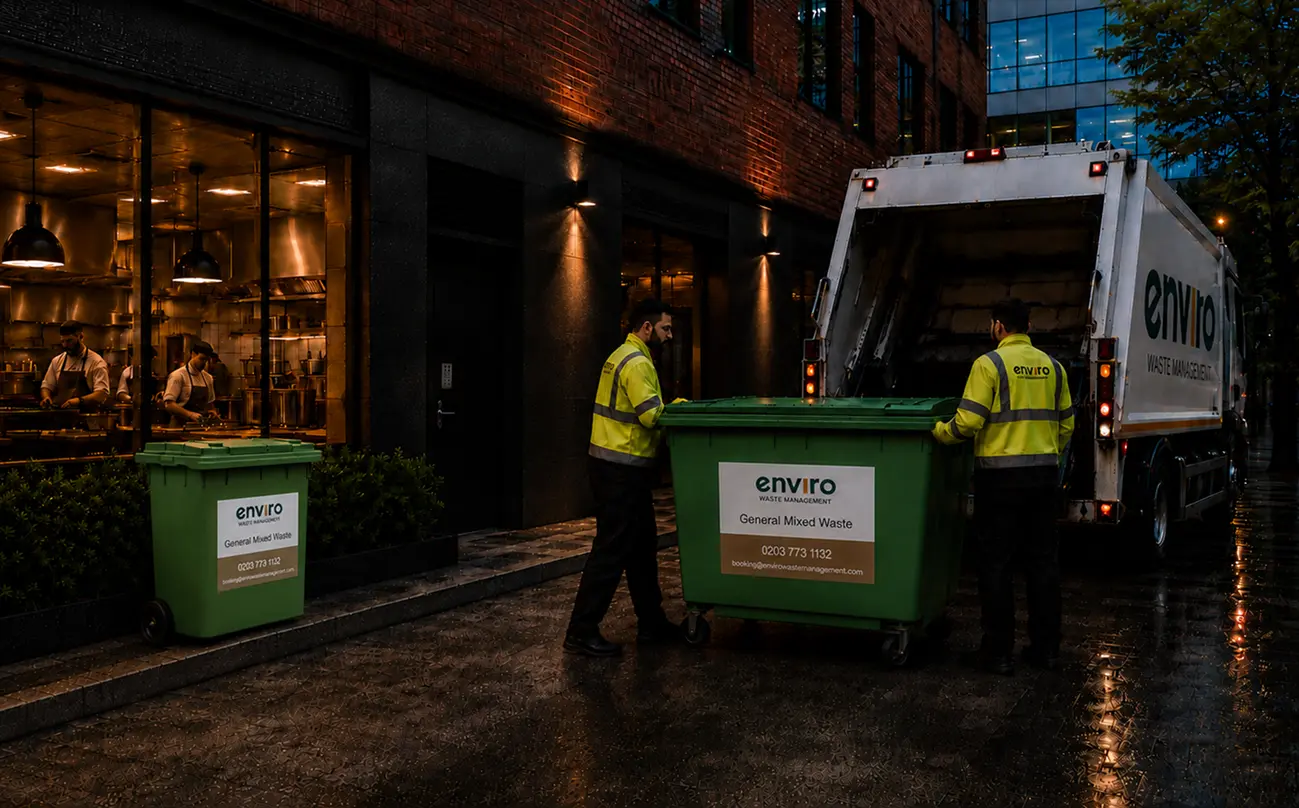
Restaurants, cafés, and food businesses generate high volumes of mixed waste every day. This often includes contaminated packaging, disposable takeaway containers, napkins and tissues, plastic film, non-recyclable food packaging, residual waste after food separation.
Food waste should not be disposed of in general waste bins. Under current UK regulations and upcoming Simpler Recycling requirements, businesses that generate food waste are expected to separate it for dedicated collection and processing.
03/05
In the retail environment, large volumes of packaging waste, seasonal display items, damaged stock and operational waste are created.
Waste piled up in shops can affect both safety and customer experience. We work quickly to remove waste, keeping stock areas, walkways, and customer-facing spaces clean and safe.
04/05
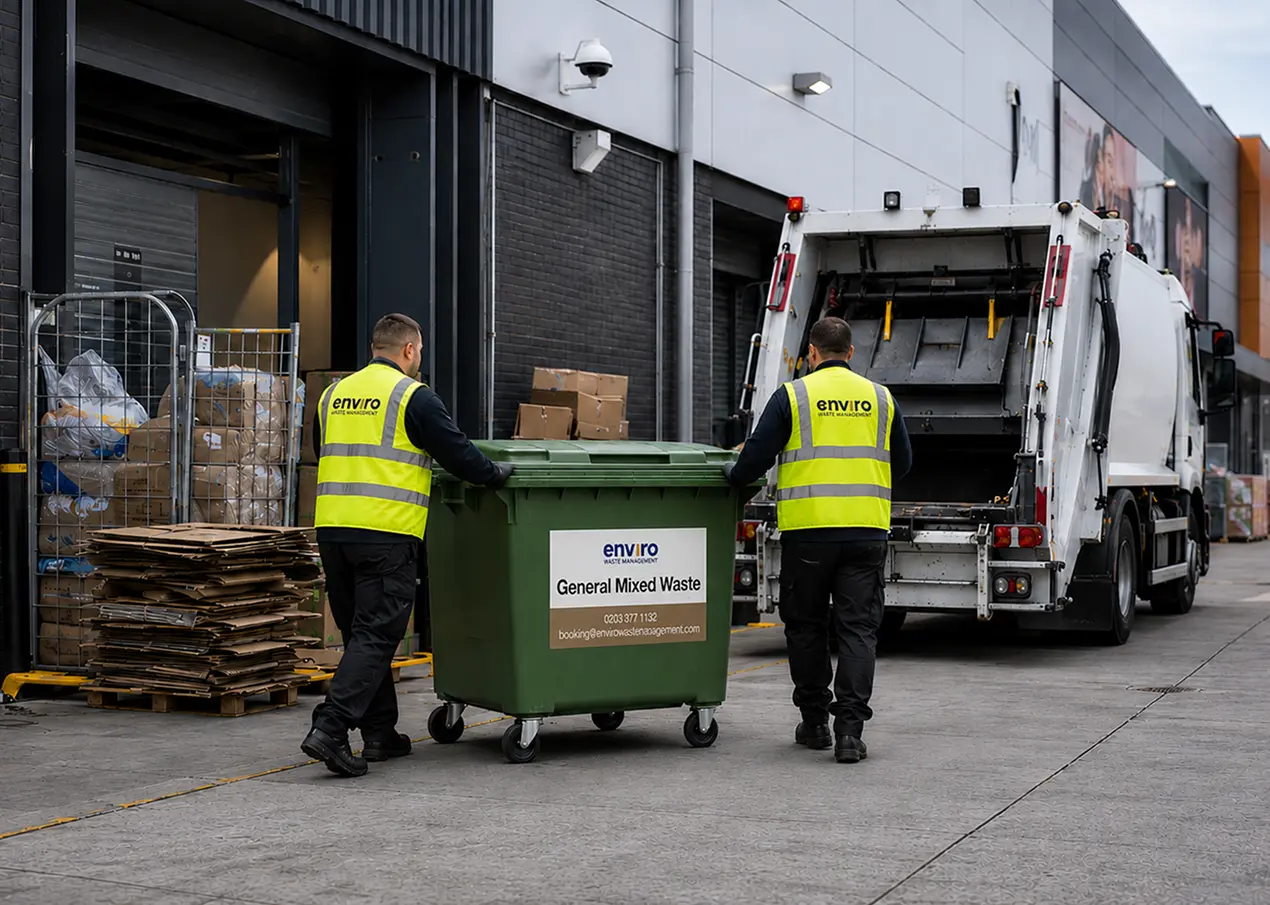
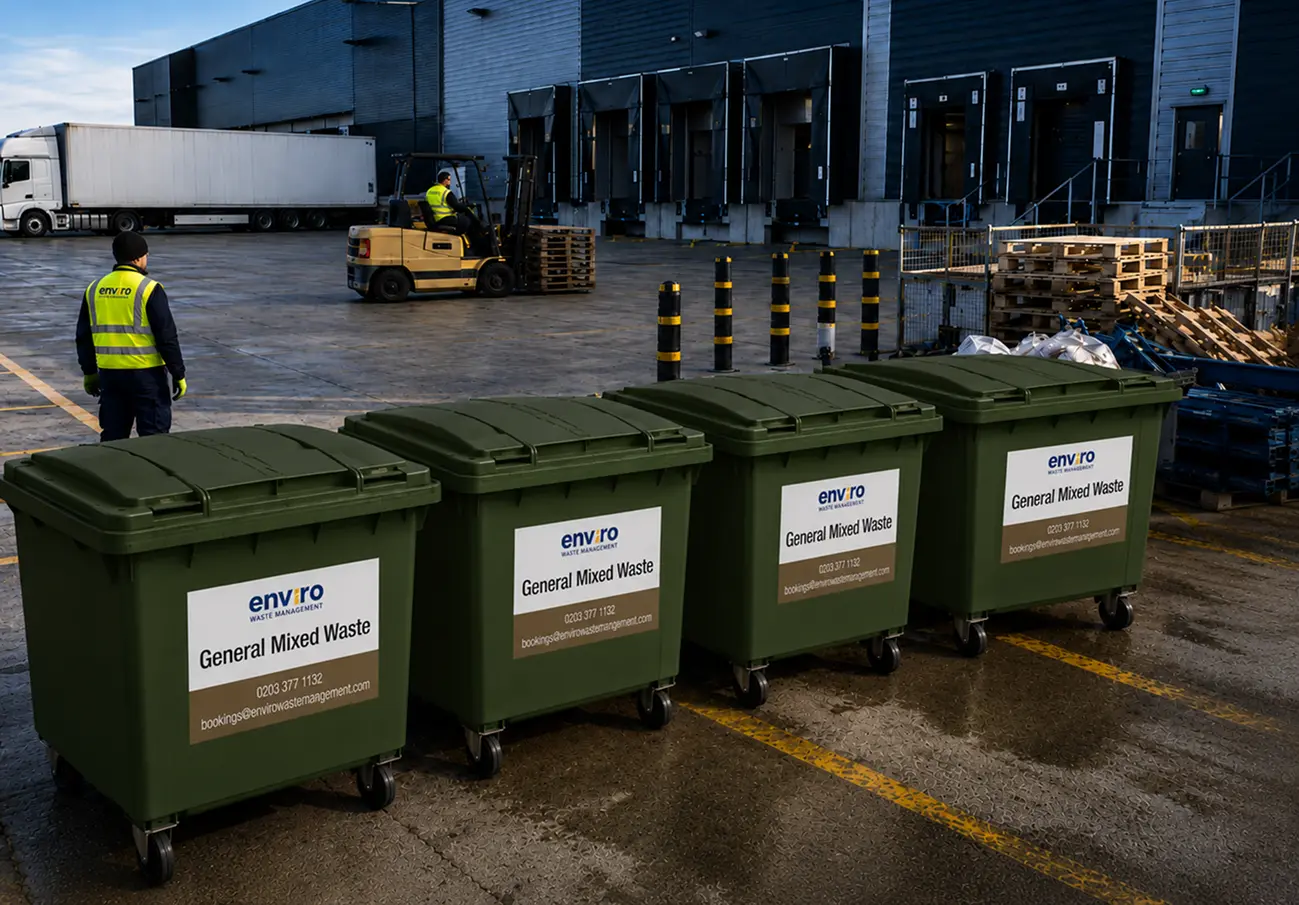
Warehouses generate waste at scale. Typical waste includes plastic wrapping, damaged packaging, mixed commercial waste, contaminated cardboard, and operational debris.
Big sites typically require a variety of bin types, more frequent collections, or bulk waste removal for oversized or high-volume waste such as damaged pallets, broken shelving, packaging build-up, or large clearance loads that cannot fit into standard bins.
We support warehouse managers with waste collection processes designed to keep waste moving efficiently without disrupting logistics flow.
05/05
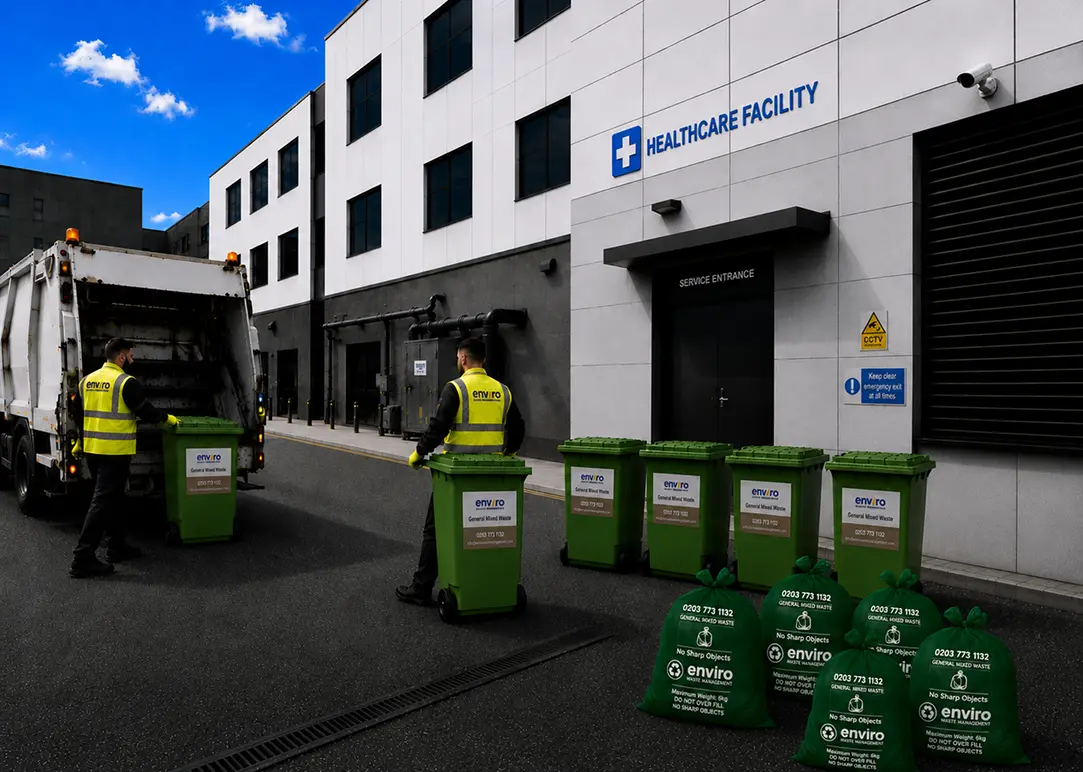
Segregation of waste is extremely important in healthcare environments. Clinical waste, sharps, pharmaceutical waste and chemical waste should not be put in general waste.
General mixed waste in healthcare settings may include packaging, disposable PPE (non-clinical), office waste, and non-hazardous daily waste.
Because hygiene and compliance are critical, waste handling must follow strict operational procedures. Enviro Waste Management ensures compliant collection processes that support safe and hygienic waste management.
Choosing a waste partner is about more than arranging collections. You need a provider that understands how your business operates. We offer –
No two businesses generate waste in the same way.
We assess:
This helps us recommend the right collection setup.
Missed collections lead to overflowing bins and operational disruption. Our scheduled collections are designed to keep waste moving consistently and reliably.
We help businesses remain compliant with:
We also provide documentation and reporting where required.
Many businesses overspend on waste because bins are oversized, collections are too frequent, or recyclable waste ends up in general waste bins. We help identify waste-saving opportunities through better segregation and collection planning.
General waste does not automatically mean landfill. Modern general mixed waste disposal often includes sorting and recovery processes designed to reduce reliance on landfill.
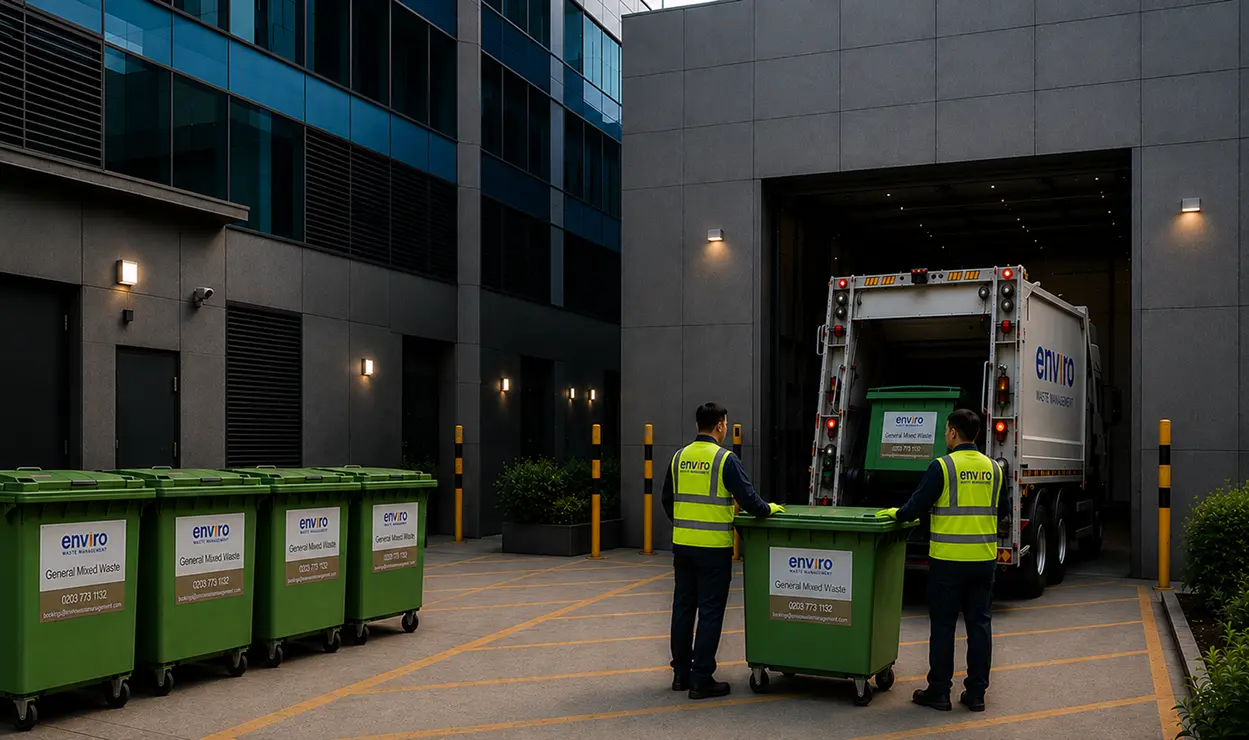
Yes. General waste does not always go directly to a landfill.
Many modern waste facilities sort mixed waste to recover recyclable materials. Remaining waste may be processed at energy recovery facilities, where it is used to generate electricity or heat rather than being landfilled. At Enviro Waste Management, we prioritise no-landfill disposal routes that maximise recovery.
Businesses can reduce general waste by improving waste segregation and identifying recyclable materials currently being mixed into general waste.
Common ways include:
Even small changes can significantly reduce disposal costs.
After collection, general waste is transported to authorised waste processing facilities. There, waste may be:
The exact process depends on the waste composition and facility capabilities.
You may be overspending if:
These are generally a sign of poor planning of collection or a lack of segregation. A waste review can identify problem areas.
Yes. A waste audit helps businesses understand:
This often reveals cost-saving opportunities through better segregation, smaller general waste bins, or adjusted collection schedules.
At Enviro Waste Management, waste audits help businesses improve efficiency, reduce waste costs, and strengthen sustainability performance.
"*" indicates required fields
"*" indicates required fields
"*" indicates required fields
"*" indicates required fields
"*" indicates required fields
"*" indicates required fields
"*" indicates required fields
"*" indicates required fields
"*" indicates required fields
"*" indicates required fields
"*" indicates required fields