
Modern co-working spaces generate waste constantly – from tenant move-outs and office upgrades to deliveries, refurbishments, and day-to-day business activity.
At Enviro Waste Management, we help co-working operators keep their buildings clean, compliant, and organised with waste solutions designed around how shared commercial spaces actually operate.
Running a shared workspace means balancing tenant experience, building rules, daily operations, and waste management simultaneously.
Our team handles removals efficiently, helping prepare the workspace for incoming tenants without leaving behind waste, bulky items, or clearance activity that affects the day-to-day running of the building.
For larger clearances that may create noise or disruption, collections are usually planned around quieter working hours and the availability of the on-site contact to help reduce disruption to neighbouring offices and shared workspaces.
In Central London, especially, parking and building access can make collections difficult to manage. Where loading bays are unavailable or restricted, routes and vehicle positioning are planned in advance to help avoid delays, parking issues, and unnecessary disruption within the building. Lift access, collection routes, and building procedures are also reviewed beforehand so collections run smoothly on the day.
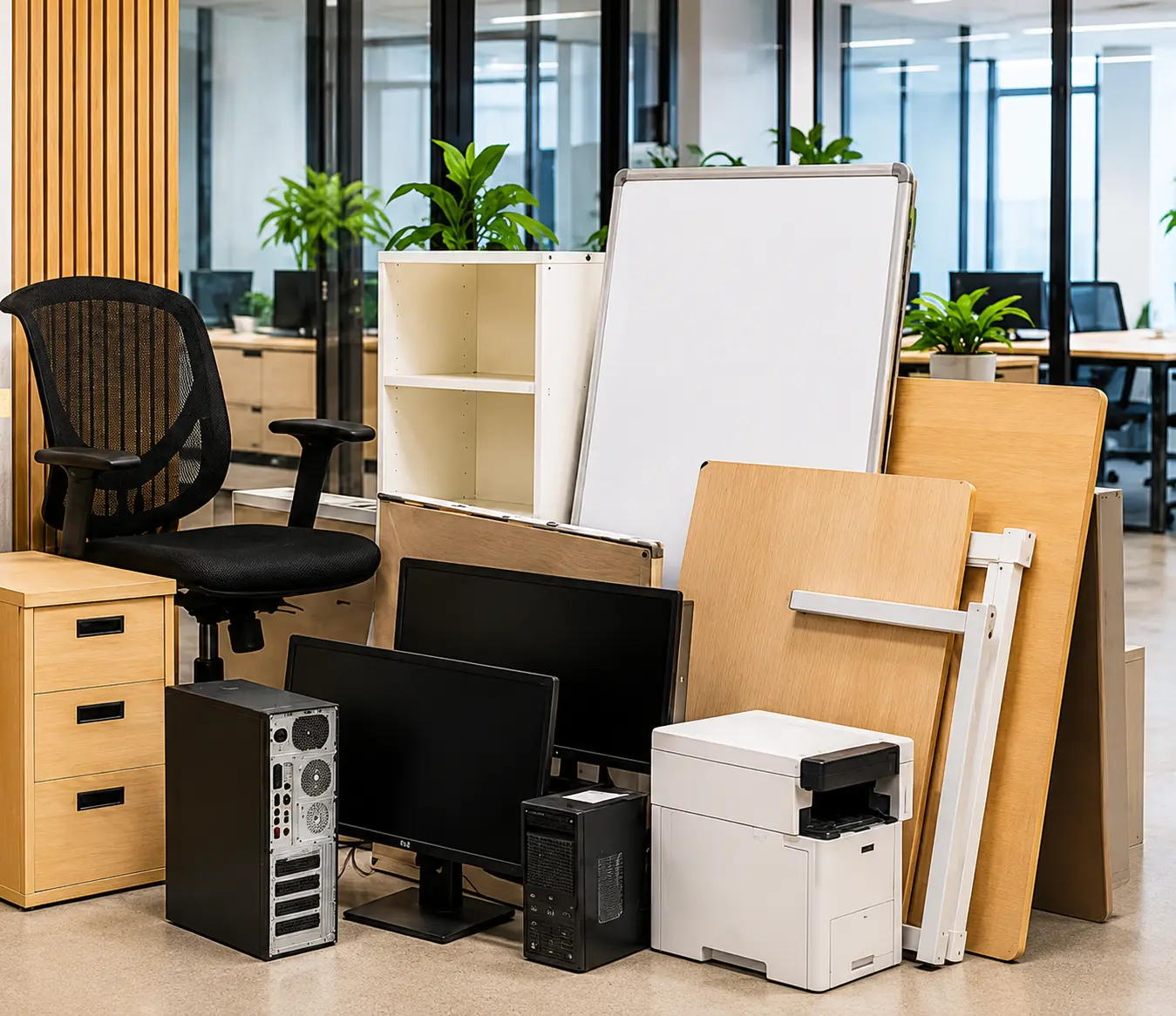
We provide bulk waste removal, dismantling support, heavy-lifting equipment where needed, and WEEE collections for desks, partitions, flooring, fixtures, paint waste, and other commercial waste generated during refurbishment works.
From confidential waste and IT equipment disposal to ongoing recycling collections, every service is handled in line with UK waste regulations requirements.
During removals, surrounding surfaces are protected, and waste is moved carefully through shared areas to help reduce dust, disruption, and impact on the workspace environment.
Alongside bulk clearances, co-working spaces also need reliable bin collections to support recycling and comply with regulations such as Simpler Recycling. Co-working spaces generate different types of waste throughout the day, from food waste and coffee cups in communal areas to cardboard deliveries, confidential paperwork, and general office waste across shared and private workspaces. Managing multiple waste streams can be confusing for staff, increasing the risk of contamination and incorrect disposal.
To support Simpler Recycling requirements, we provide dedicated bins and sack collections for general waste, dry mixed recycling, food waste, and confidential waste based on waste volume, how waste is produced across the building, and the storage space available on site.
Bin sizes, collection frequency, and storage arrangements are planned around occupancy levels, communal area usage, and the practical limits of the workspace to help prevent overflowing bins, contaminated recycling, and unnecessary collections.
For example, where large 1100L bins are unsuitable because of limited storage space or lower waste volumes, smaller bins with more frequent collections may be recommended instead.
Collections are planned around the workspace’s busiest hours and the availability of the on-site contact to help reduce disruption during the working day.
Collection windows are arranged in advance, and drivers provide updates before arrival so sites can prepare access where needed. If timing needs to change due to meetings, tenant activity, or access delays, the operations team works to adjust collections wherever possible to keep removals flexible and disruption-free.


Most co-working spaces require bulk and specialist waste removal for move-outs, refurbishment works, upgrades, or workspace changes. For day-to-day waste, we also provide ongoing bin and sack collection services.
Designed for shared spaces undergoing tenant exits, workspace reconfigurations, refurbishments, and large-scale clearances.
Before collections begin, our operations team assesses building access, loading bay size, lift dimensions, parking restrictions, waste volume, and the quickest removal routes around the site.
In Central London, especially, collections are often carried out through loading bays to help avoid parking fines, blocked roads, and disruption around busy commercial buildings.
In multi-floor workspaces with shared access points and constant tenant movement, clearances are planned around busy working hours, tenant activity, and the availability of the on-site contact to help minimise disruption across the workspace.
For bulky items such as desks, partition walls, meeting tables, storage units, and WEEE waste, our team dismantles them on-site where needed using suitable tools and protective floor coverings.
Waste is then moved safely through lifts, corridors, and shared areas while minimising dust, noise, and disruption.
We also manage the compliant disposal of confidential waste, furniture, electronics, and mixed commercial waste generated during the clearance process, with full Duty of Care paperwork and waste reporting available where required.

Designed for shared spaces that require reliable day-to-day waste management across shared kitchens, breakout areas, private offices, meeting rooms, and communal facilities.
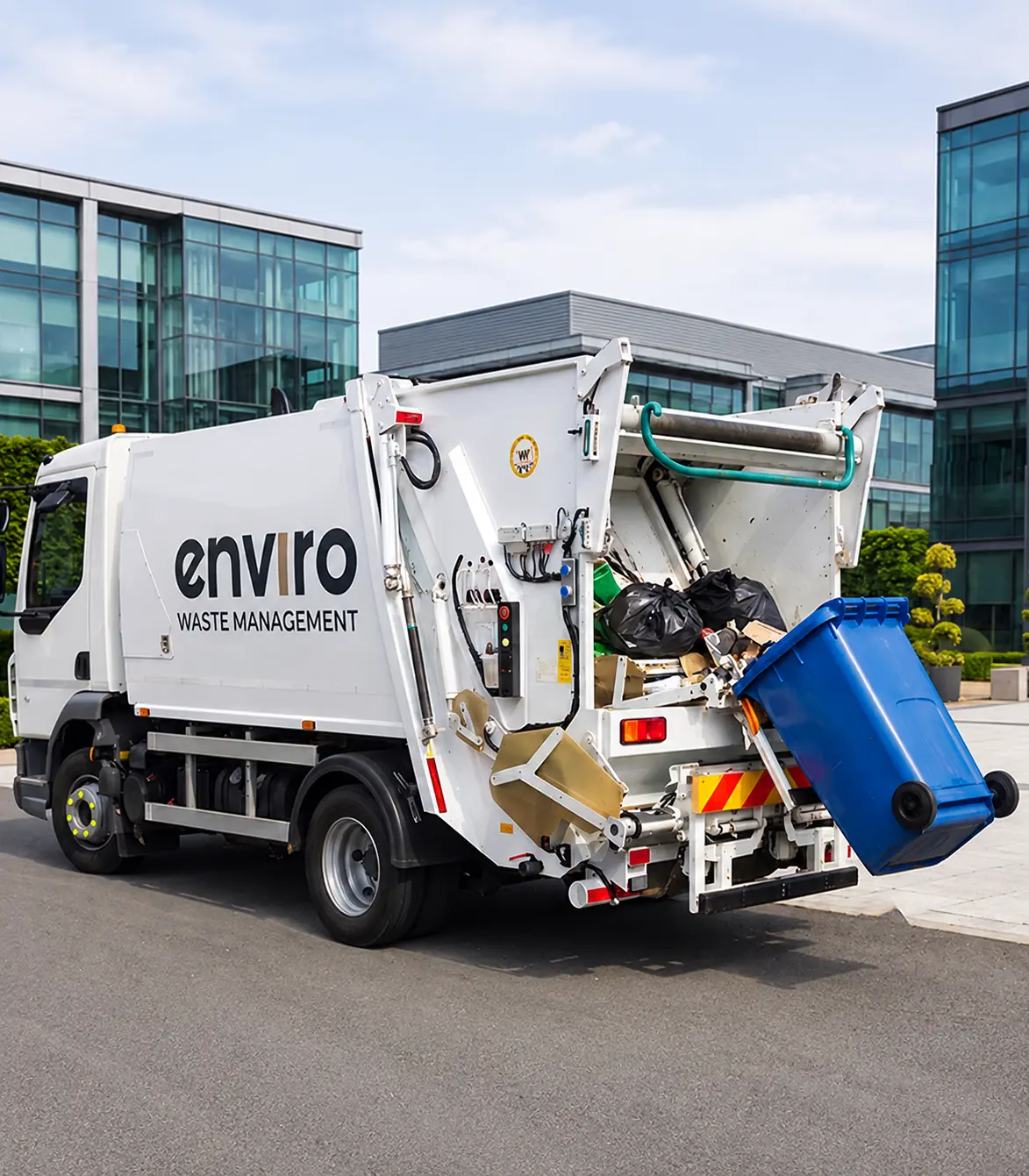
Different types of waste are generated across the building throughout the day – including food waste from communal kitchens, cardboard from deliveries, confidential paperwork from offices, and mixed recycling from shared areas.
Our team assesses how waste is generated across the workspace and recommends suitable bin types, sizes, and collection frequency based on occupancy levels, kitchen usage, footfall, and available bin storage space.
Within larger office buildings, collections are planned around loading bay access, lift availability, busy working hours, and building access rules to help ensure removals are carried out smoothly and with minimal disruption.
For example, where storage space is limited or large 1100L bins are unsuitable for the amount of waste being produced, smaller bins with more frequent collections may be recommended instead.
We also help co-working operators improve recycling by separating recyclable materials and food waste correctly instead of allowing everything to enter general waste streams.
This can help improve recycling rates while also reducing unnecessary waste costs. For example, food waste mixed into general waste collections can increase collection weight and disposal charges over time.
Regular reporting also helps identify common issues such as overflowing bins, recycling contamination, or collections taking place more often than needed.
Whether for a one-off clearance or ongoing waste management, every service is designed to keep the workspace clean, compliant, and running smoothly.
Bulk Waste Removal
Office Clearance Services
Skip Hire
Furniture Disposal & Removal
WEEE Waste Collection & Disposal
Confidential Waste Collection & Shredding
General Waste Bin Collections
Dry Mixed Recycling (DMR) Collections
Food Waste Collections
Bin & Sack Collection Services
Construction & Refurbishment Waste Removal
Cardboard & Packaging Waste Recycling
Waste Audits & Consultancy
Recycling & Simpler Recycling Compliance Support
Duty of Care Documentation & Reporting
In shared workspaces, waste management requires careful planning rather than a standard one-size-fits-all approach.
Between shared facilities, multiple tenants, building management rules, loading bay schedules, and limited storage space, even setting up collections requires proper coordination.
As occupancy levels, tenants, and workspace requirements change, collection schedules and waste setups can also be adjusted.
Regular reporting and operational support help keep the service running efficiently over time.
Every co-working space operates differently. The setup process starts by understanding occupancy levels, shared facilities, tenant turnover, expected waste volumes, and whether the site needs ongoing bin collections, skip hire, bulk clearances, or a combination of services.
Most commercial buildings have their own access rules and collection procedures. Things like loading bay access, lift usage, collection times, storage areas, security check-ins, and contractor procedures are reviewed in advance to help avoid delays on collection day.
Bin sizes, collection frequency, vehicle access, labour requirements, and waste streams are planned around how the workspace is used each day. This helps prevent overflowing bins, unnecessary collections, and disruption within shared areas.
Before collections begin, risk assessments, Duty of Care documentation, collection scheduling, and any required building coordination are completed to help ensure the service runs smoothly from day one.
As occupancy levels, tenants, and workspace requirements change, collection schedules and waste setups can also be adjusted. Regular reporting and operational support help keep the service running efficiently over time.
With Enviro, waste management is set up to work around the building – not the other way around.
"*" indicates required fields
"*" indicates required fields
"*" indicates required fields
"*" indicates required fields
"*" indicates required fields
"*" indicates required fields
"*" indicates required fields
"*" indicates required fields
"*" indicates required fields
"*" indicates required fields
"*" indicates required fields
"*" indicates required fields